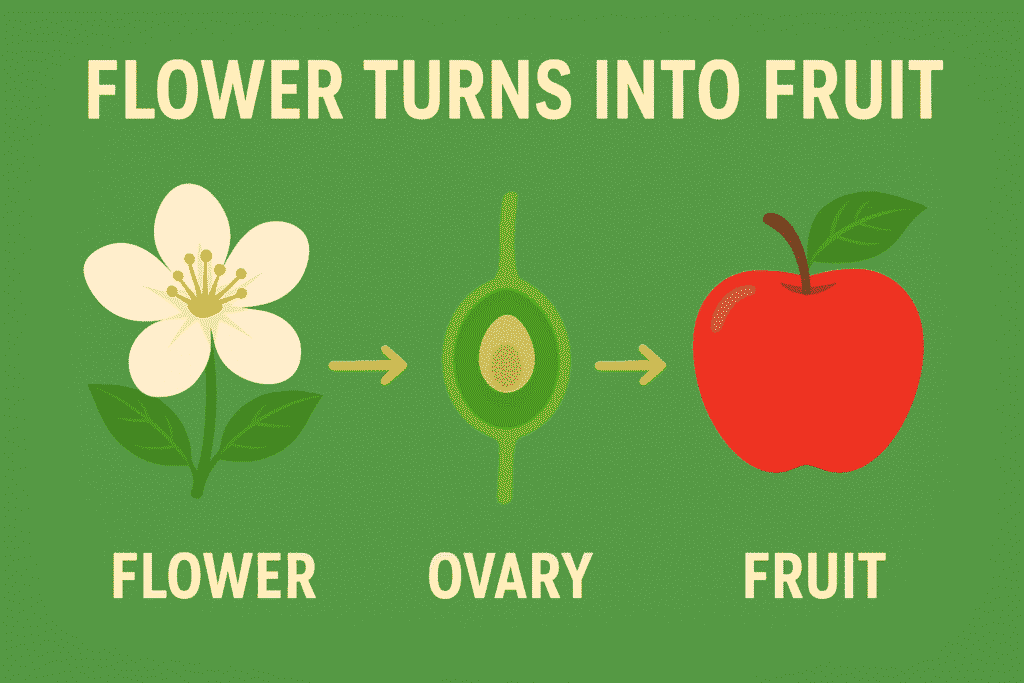

Ever stood over a tomato plant and felt excitement when a bloom turned green? That’s when a flower starts to become a fruit. It’s a magical moment when a flower’s base swells into a green marble. This is the start of a journey from pollen meeting an ovule to a fruit ready to travel. Hi I’m Mhd Zain, and I’ve spent the last 5 years learning how flowers work—spotting species, testing tools, and digging into plant science. Here, we’ll follow a flower’s journey to fruit in plain language, with examples you can see in your garden or at the market.

This article will guide you through the flower to fruit process. You’ll learn about pollination, fertilization, and growth. You’ll also discover why some flowers don’t turn into fruits. Plus, you’ll see how many foods we eat are actually fruits.
And, you’ll find out how your garden choices can help fruits grow.
Key Takeaways
- The flower to fruit process begins after pollination and fertilization, when the ovary develops into a fruit.
- Fruit development protects seeds and prepares them for dispersal by animals, wind, or water.
- Not all blooms become fruit—some are sterile, male-only, or unfertilized and will drop petals without setting fruit.
- Many familiar foods—tomatoes, beans, and nuts—are botanically fruits, though they differ in texture and origin.
- Your garden environment and pollinator activity strongly affect whether a lower to fruit transformation succeeds.
Flower anatomy and the parts that matter for fruit development
Understanding flower anatomy is key to seeing how a flower turns into fruit. The basic layout includes petals that attract pollinators, stamens that produce pollen, and the female carpel that houses the ovary. After pollination, the flower to fruit process starts, focusing on the ovary.

Overview of floral organs: stigma, style, ovary, stamen, petals
The stigma catches pollen with its sticky surface. The style guides pollen down to the ovary. Stamens have a filament and anther where pollen forms. Petals attract pollinators with color, scent, and nectar.
These parts work together during the flower to fruit process. When pollen lands on the stigma, it starts the growth of a pollen tube. This tube moves pollen toward the ovule inside the ovary. After fertilization, petals often wither, while the ovary starts to swell.
Carpel, ovule, and ovary explained in simple terms
The carpel is the female part of the flower, which can be single or fused. Inside, you find ovules, the tiny structures that become seeds after fertilization. The ovary is the round base that protects ovules and later becomes the fruit you harvest.
Think of the carpel as a protective case, the ovule as the future seed, and the ovary as the shell that will expand and change texture. This trio defines how effectively a flower changes into fruit and what type of fruit will form.
Pericarp layers: exocarp, mesocarp, endocarp and why they matter
The pericarp layers arise from the ovary wall and determine fruit texture and structure. The exocarp becomes the outer skin you see. The mesocarp often forms the fleshy, edible middle. The endocarp surrounds the seed, sometimes turning into a hard pit.
Different fruits show different fusions of these layers. In peaches, the mesocarp is juicy and edible, while the endocarp forms the hard stone. In peas, the pericarp is dry and splits open to release seeds. Knowing pericarp layers helps you predict fruit type and quality.
| Flower Part | Role in Flower to Fruit Process | Outcome in Mature Fruit |
|---|---|---|
| Stigma & Style | Catches pollen and guides pollen tube to ovary | Lose function after fertilization; style may wither |
| Stamen (anther, filament) | Produces and releases pollen for fertilization | Stops producing pollen; may fall away |
| Carpel / Ovule / Ovary | Carpel contains ovules; ovary houses ovules where fertilization occurs | Ovules become seeds; ovary becomes fruit |
| Pericarp layers | Exocarp, mesocarp, endocarp form from ovary wall and define texture | Creates skin, flesh, and pit or seed enclosure in the final fruit |
| Petals | Attract pollinators to start the flower to fruit process | Often drop or wither once the fruit begins forming |
Pollination and fertilization: triggers that start the flower to fruit process
Before a flower turns into a fruit, two events must happen: pollination and fertilization. Pollination is when pollen is moved to the stigma. Fertilization happens when sperm from pollen meets an ovule. These steps lead to seeds and fruit.

For successful pollination, pollen must land on a receptive stigma. Some plants pollinate themselves, while others need animals, wind, or people for cross-pollination. Knowing the difference helps in planning for fruit set in your garden.
After pollen lands, a pollen tube forms. This tube carries sperm down the style to the ovule. If the tube is blocked or slow, fertilization fails, and no fruit forms.
Fertilized ovules become seeds. At the same time, the ovary swells and changes. Petals often drop as fertilization starts, showing the flower is turning into a fruit. You can influence this by hand pollination or careful crop management.
Weather and pollinator numbers affect success. Dry, calm days are best for insects, while rain and wind can hinder visits. To improve yields, focus on pollination timing and protect pollinators for better fertilization and fruit growth.
| Stage | What happens | What you can do |
|---|---|---|
| Pollination | Pollen reaches stigma via self-pollination or cross-pollination by insects, wind, animals, or people | Plant pollinator-friendly flowers, avoid pesticide sprays during bloom, or hand pollinate |
| Pollen tube growth | Pollen grain produces a pollen tube that travels down the style carrying sperm to the ovule | Ensure plants are healthy and watered; avoid conditions that block tube growth like extreme heat |
| Fertilization | Sperm fuses with ovule; fertilized ovules set seed and ovary begins to enlarge | Monitor fruit set, thin excess blooms or fruits, and support developing fruit with proper nutrients |
Flower Turns Into a Fruit: stages of fruit development you can observe
After pollination and fertilization, you can watch the flower to fruit process unfold in clear stages. Each stage offers clues about how a bloom becomes edible or adapted for seed dispersal.

Fruit set: This first sign of fruit development appears as a small swelling where the ovary was. You can spot fruit set when petals fall and a tiny green bulge remains. Poor pollination, drought, extreme temperatures, or lack of pollinators can limit fruit set and reduce yield.
Growth and maturation: During growth and maturation the ovary enlarges through two main actions: cell division followed by cell expansion. Sugars accumulate in the mesocarp, seeds mature, and the pericarp layers start to define the final texture. How long this phase lasts affects size and flesh quality.
Ripening: Ripening transforms a mature green fruit into one with new color, softer texture, and richer flavor. Hormones such as ethylene trigger pigment shifts, weaken cell walls, and change sugar and acid ratios. These changes ready the fruit for eating and for seed dispersal by animals, wind, or water.
Watching these stages in your garden helps you manage water, temperature, and pollinator visits. This improves fruit set and guides healthy fruit development from blossom to ripe fruit.
Types of fruits and how different flowers produce different fruit forms
Watching how a flower turns into fruit is fascinating. Different plants have their own ways of making fruits. This means fruits can be different in texture, shape, and taste. Here are some examples to help you spot these differences in your garden or at the market.
Simple fruits grow from one ovary. Examples include beans, peas, walnuts, and lemons. They come from a single carpel or from fused carpels. The layers of the pericarp indicate whether the fruit is dry or fleshy.
Aggregate fruits are made of many small carpels in one flower. Raspberries and blackberries are good examples. Each small part started as a separate ovule-bearing carpel. They sit together on a single receptacle, giving them a clustered look.
Multiple fruits are formed when many flowers in an inflorescence fuse together. Pineapple is a classic example. Each flower in the cluster forms its own fruit, then they unite into one large fruit. You can see where individual flowers were on a pineapple’s surface.
Accessory fruits have non-ovary parts as the main edible part. Apples and strawberries are examples. In apples, the flesh comes from the hypanthium or swollen stem. In strawberries, the red flesh is swollen receptacle tissue, and the tiny “seeds” are the real fruits.
Here’s a table to compare these fruit types easily. It shows where they come from, examples, and what to look for when observing how a flower changes into fruit.
| Fruit Type | Origin | Common Examples | Clues to Identify |
|---|---|---|---|
| Simple fruit | Single ovary (one carpel or fused carpels) | Beans, peas, lemons, walnuts | Single seed cavity or pod; clear pericarp layers |
| Aggregate fruit | Many carpels in one flower | Raspberries, blackberries | Cluster of small drupelets or achenes on one receptacle |
| Multiple fruit | Inflorescence of many flowers | Pineapple, figs (in some cases) | Surface shows remnants of many fused flowers |
| Accessory fruit | Non-ovary parts enlarge and become edible | Apple, strawberry, pear (partly) | Flesh comes from hypanthium or receptacle; true ovary is smaller |
Factors that affect whether a flower becomes fruit and final yield
Boost your harvest by understanding the key factors that affect fruit set. The flower-to-fruit process depends on many elements. These include environmental, biological, insect, and microbial factors.
Environmental influences on fruit development are powerful. Plants need steady water during bloom and early fruit growth. Temperature swings, hail, and strong winds can damage blossoms and young fruit.
You can plan irrigation and shelter to reduce those risks.
Some plants have biological limits that you must accept. Certain cultivars produce sterile flowers or only male blooms that never set fruit. Other species reproduce by runners or bulbs, investing less energy in seeds and fruit.
Choosing varieties suited to your site can avoid wasted effort.
Pests and pollinators shape outcomes in opposite ways. Insect damage and fungal disease can kill flowers or deform fruit. A lack of pollinators reduces fruit set in crops that require cross-pollination.
Protecting pollinators while managing pests helps both productivity and biodiversity.
Use practical tips to improve fruit set in your garden. Hand-pollinate flowers when bees are scarce. Water consistently during the fruiting window.
Select varieties known for disease resistance and climate fit. Protect plants from hail with row covers and reduce wildlife losses with netting or fencing.
You can balance attracting wildlife for seed dispersal with protecting harvest. Offer habitat or dedicated feeding stations to draw animals away from ripe fruit. Keep chemical sprays off edible surfaces to avoid residue that makes fruit inedible.
Simple steps yield measurable change in the flower-to-fruit process. Small shifts in timing, shelter, or variety choice let you increase final yield and enjoy more of what you grow.
Conclusion
When you see a fruit on your kitchen counter or in a grocery aisle, remember it started as a flower. This flower turns into a fruit conclusion is simple. Pollination triggers pollen tube growth and fertilization, making fertilized ovules into seeds. The ovary then develops into the fruit tissue you eat.
The range of fruits you encounter shows how flowers are built and classified. Simple, aggregate, multiple, and accessory fruits form in different ways. The pericarp layers—exocarp, mesocarp, endocarp—explain why an apple feels different from a peach.
Environmental and biological factors shape whether a flower will set fruit. Water, temperature, pollinators, pests, and plant fertility all matter. With steady watering, habitat for bees, and basic pest control, you can raise the odds that your flowers complete the transformation into healthy fruit.
Keep observing and adjusting. The more you learn about the steps from pollination to ripening, the better you’ll predict harvest outcomes and enjoy the fruits of your efforts. This concise summary of fruit development gives you the key ideas to watch and act on. And don’t forget to share your thoughts in the comments below! I’d love to hear what you think about this process.
Check out my earlier article: A Simple Guide to the Evolution of Flowers and Their Amazing Journey
FAQ
What exactly is a fruit in botanical terms?
A fruit is the ripened ovary of a flowering plant. It contains seeds and a developing embryo. After fertilization, the ovary enlarges and matures into protective tissue called the pericarp. This tissue may be fleshy or dry. Botanically, many surprising foods—beans, nuts, corn, even popcorn hulls—are fruits. They develop from an ovary and enclose seeds.
Which flower parts matter most when a flower turns into a fruit?
The female carpel is key. It includes the stigma, style, and ovary. The stigma catches pollen, the style guides the pollen tube, and the ovary contains ovules that become seeds when fertilized. Male parts (stamens) produce pollen, and petals often fall away after fertilization. The ovary’s tissues later form the pericarp layers—exocarp, mesocarp, and endocarp. These layers determine the fruit’s skin, flesh, and inner layer around the seeds.
How does pollination lead to fertilization and fruit formation?
Pollination delivers pollen to the stigma. If compatible, a pollen grain grows a tube down the style to the ovary. It delivers sperm to fertilize ovules. Fertilized ovules become seeds, and the ovary begins to swell. It develops into fruit. Without pollination and fertilization, most flowers won’t form viable fruit.
What’s the difference between self-pollination and cross-pollination?
Self-pollination happens when a flower’s own pollen fertilizes its ovules. Cross-pollination uses pollen from another flower. Cross-pollination often relies on wind, insects, birds, or humans.It can improve genetic diversity and fruit set. Some plants are self-fertile; others require cross-pollinators.
What visible changes should I expect when a flower starts turning into fruit?
You’ll often see petals wither or drop. The ovary will swell into a small bulge—a stage called fruit set. Over time, cell division and expansion enlarge the ovary. Sugars accumulate, seeds mature, and eventually ripening triggers color change, softening, and flavor development.
What is fruit set and what can prevent it?
Fruit set is the initial development of a swollen ovary after successful fertilization. It can fail if pollinators are scarce, the weather is unfavorable during flowering, the flower is sterile or male-only, or environmental stresses like drought or temperature extremes occur.
How do fruits grow and mature after fruit set?
Growth begins with cell division followed by cell expansion. Sugars and water accumulate mainly in the mesocarp, and seeds mature inside the endocarp. The balance of these processes determines final size, texture, and whether the fruit is fleshy or dry.
What actually causes ripening—why do fruits change color and soften?
Hormonal signals drive ripening. Ethylene is a key hormone in many fruits, triggering color changes, softening through cell wall modifications, and flavor development. Ripening prepares the fruit for seed dispersal.
How are fruits classified by origin and structure?
Fruits are classified as simple (from one carpel or fused carpels, like peas and nuts), aggregate (many carpels from a single flower forming clustered fruits like raspberries), multiple (many flowers’ ovaries fuse into one fruit, as in pineapple), and accessory (non-ovary parts become fleshy, for example, apples and strawberries).
Why do some fruits feel like they’re made of different parts—for example, an apple vs. a strawberry?
In accessory fruits, the edible flesh comes from tissues other than the ovary. Apples and pears develop much of their flesh from the hypanthium or swollen stem, while strawberry flesh is mostly the receptacle. The tiny seeds on its surface (achenes) are the true fruits.
Can flowers fail to produce fruit for biological reasons?
Yes. Some flowers are strictly male and cannot form fruit; hybrids may produce sterile flowers, and many plants reproduce asexually (runners, bulbs) and may invest less in fruit. Those biological limits mean not every bloom can become fruit.
How do pests, diseases, and pollinator availability affect fruit yield?
Pests and diseases can damage flowers or developing fruit, reducing yield. A lack of pollinators reduces fruit set in species that require cross-pollination. Supporting pollinators, choosing resistant varieties, and managing pests are key to protecting flowers and improving fruit development.
What environmental factors most influence whether flowers become fruit?
Water availability, temperature, wind, hail, and extreme weather all affect fruit set and development. Adequate irrigation, frost protection, and shelter from hail or strong winds help ensure that more flowers successfully set fruit.
What practical steps can you take to increase fruit set in your garden?
Hand-pollinate when pollinators are scarce, water consistently during development, choose varieties suited to your climate, protect plants from hail and wind, use netting or fencing to deter wildlife, and manage pests and disease with safe methods. These practices increase the likelihood that flowers will complete the transformation into fruit.
How are seeds dispersed once fruits ripen?
Ripe fruits have evolved many dispersal strategies: animals eat fleshy fruits and spread seeds, wind carries winged or lightweight seeds, water transports buoyant fruits, some pods explosively eject seeds, and others use hooks or burrs to hitch a ride on animal fur. Dispersal strategy often explains a fruit’s texture and appearance.
Are all edible fruits sweet when ripe?
No. Sweetness depends on species and the balance of sugars and acids developed during ripening. Many botanical fruits—nuts, legumes, and grains—aren’t sweet but are fruits by definition because they derive from a ripened ovary and enclose seeds.

Pingback: Organic Flower Farming in North America
Pingback: A Simple Guide to the Evolution of Flowers and Their Amazing Journey
Pingback: Which Part of the Flower Becomes the Fruit?