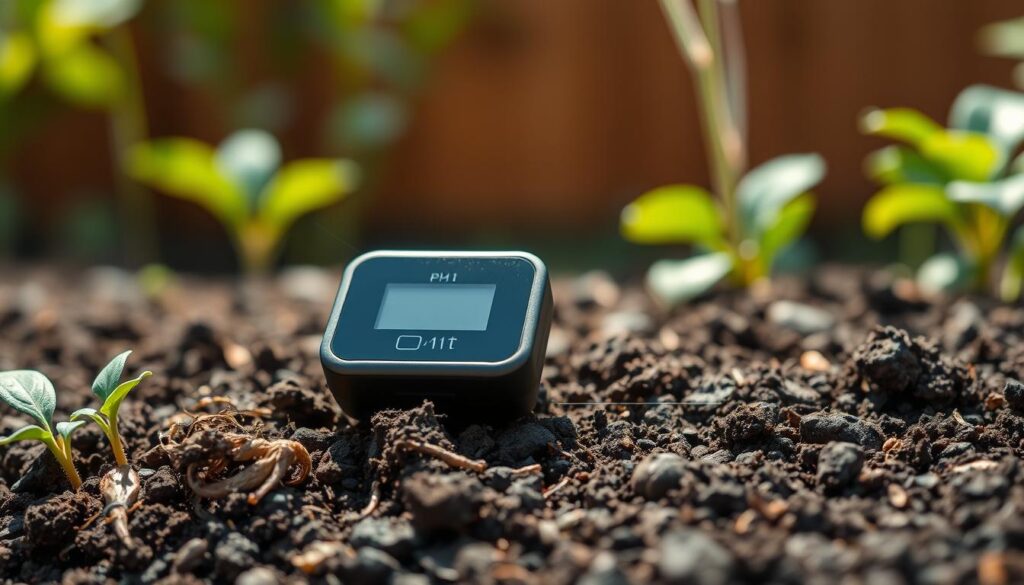

Have you ever wished your plants could tell you when they truly need water? A modern AI soil sensor turns what is wanted into a practical tool. It reads moisture in the root zone and feeds real-time data to a controller and app so you can water with confidence.
The AC Infinity AC-SLS3 is an affordable product at $21.99 that pairs with AC Infinity controllers to monitor saturation levels. Its detachable, IP67-rated probe is gentle on roots and supports deeper placement, and it can automatically trigger pumps or valves.
The device sends alerts to your phone and gives clear guidance so you spend less time guessing and more time enjoying healthier plants. One sensor works per controller by default, and a splitter is available if you want to expand monitoring across more spots.
Key Takeaways
- Real-time monitoring helps you water at the right time and protect plant health.
- The AC Infinity AC-SLS3 offers simple automation and app alerts for busy gardeners.
- Durable probe design supports deeper placement and gentle use around roots.
- Entry-level price lowers the barrier to trying smart gardening tools.
- Accurate data builds your confidence and improves long-term garden results.
Understand the AI soil sensor: how it reads your soil and guides watering
Start with the probe in the root zone. That tip collects moisture and turns it into usable data. The detachable stem lets you place the probe deeper, where roots actually take up water.
The probe sends moisture measurements to a controller at a 1-second refresh rate with ±5% accuracy. The controller processes those readings and pushes real-time updates to the app so you know when to water or wait.
How readings map to action
Fast updates save you time. Quick refresh rates catch changes during hot afternoons or after a rain. Consistent data builds a history you can use to spot patterns across pots and beds.
Protecting roots and structure
The IP67-rated probe is sealed against liquids and dirt and designed to be gentle on roots. Deep placement gives more accurate levels for the root zone without compacting the ground.
| Element | What it reports | Why it matters |
|---|---|---|
| Probe tip | Moisture and saturation readings | Targets the zone where roots absorb water |
| Controller | Processed data and triggers | Turns measurements into on/off actions |
| App | Real-time levels and history | Alerts you and shows trends over time |
Why it matters right now: healthier plants, stronger roots, and smarter water use
Knowing moisture levels in real time keeps your garden healthy and cuts waste. Accurate tracking prevents overwatering and underwatering which harm plant health and yields.
Prevent overwatering and underwatering with confidence
The soil sensor warns you before beds get too wet or too dry. That means you water with confidence instead of guessing. Early alerts protect roots and reduce disease risk.
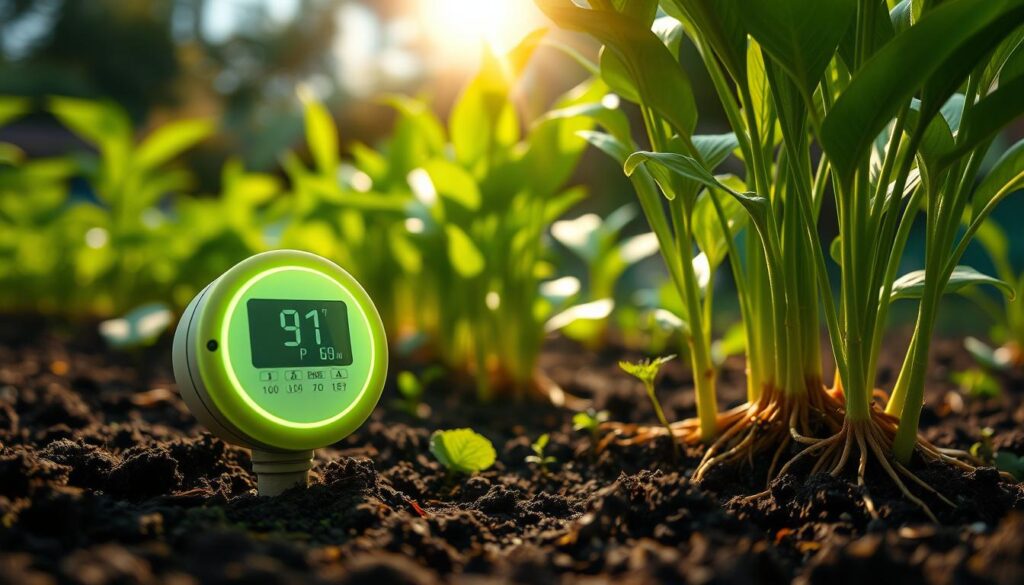
Save time, water, and stress through automated monitoring
Automated monitoring lightens daily management. Real-time data lets controllers adjust during heat spikes when evaporation changes conditions fast.
- Stronger roots: steady moisture improves nutrient uptake and performance.
- Less waste: better timing cuts water use and supports sustainability.
- Smarter habits: consistent feedback builds your instincts each season.
Tip: Balance root zone targets for different containers and soil types to get reliable results and healthier plants.
Inside the AC Infinity AC-SLS3: product features, accuracy, and dimensions
Discover how the AC-SLS3’s detachable stem and long cord make placement simple across beds and pots. This product balances rugged build with practical size so you can install it where it helps most.
Durable construction: The fiberglass probe is IP67 sealed and ships with a stem cap for deeper placement. The gentle probe tip minimizes root disturbance in fabric pots, raised beds, and garden beds.
Precision and specs
The AC-SLS3 delivers ±5% accuracy and a 1-second refresh rate for timely measurements. Compact dimensions are 1.41 x 2.83 x 0.55 in, and the cord runs 144 in for flexible placement.
Pairing, alerts, and use
Designed for AC Infinity AI Controllers, the product pairs to trigger water devices and push app alerts. One sensor is supported per controller natively; use a splitter to expand that ability and monitor more zones.
- Why it matters: reliable readings help protect plant health and reduce wasted water.
- Place the probe deeper for mature crops and shallower for seedlings to match needs.
| Element | What it reports | Why it matters |
|---|---|---|
| Probe | Moisture measurements | Targets the root zone for accurate readings |
| Controller | Processed data | Activates devices and sends alerts |
| App | History and real-time levels | Shows trends and prompts action |
Smart irrigation control: connect sensors to GeoDrops, Rachio, and the cloud
Pairing ground-truth monitoring with cloud control makes irrigation smarter and less hands-on. GeoDrops offers 24×7 monitoring, moisture forecasting, and historical insights that help your system water only when needed.
Weather-based vs. sensor-guided watering: weather schedules use forecasts, while sensor-guided setups use actual ground readings and forecasting to decide when to run zones. Combining both cuts wastes water and improves plant health.
Hands-free options and zone control
GeoDrops can control compatible controllers like Rachio directly. It also talks to the cloud to trigger zones through IFTTT or send app alerts if you prefer manual approval.
The platform pauses watering after rain and resumes when levels recover. Setup is simple—no trenching or wiring—and the flush-mount device blends into gardens while staying durable.
| Feature | What it does | Benefit |
|---|---|---|
| GeoDrops Cloud | Forecasts moisture, stores historical data | Improves long-term management and accuracy |
| Rachio integration | Direct zone control | Precise irrigation per zone without extra wiring |
| IFTTT & notifications | Automated rules and app pings | Hands-free actions or manual approvals |
| Flush-mount device | Easy install, sits with sprinklers | Quick setup, tidy look, durable |
Cost and support: GeoDrops starts at $119 and includes tech support plus a 30-day return policy. You can choose fully automated control or notification-first workflows to fit your routine.
Accuracy you can trust: real-time soil data, ET insights, and performance
When root-zone data meets direct ETa and local rainfall, your watering decisions get smarter.
Ground-truth readings from root-level devices like Vertex give you immediate moisture level data. Combined with canopy ETa from Evato and rain totals from the Rivo gauge, these inputs start providing accurate recommendations before plants show stress.
From ground truth to recommendations: moisture, ETa, and weather data working together
You’ll notice the key difference between ET estimates and direct ETa measurements. ETa reads actual plant water loss above the canopy. That direct number boosts accuracy for day-to-day watering.
Telemetry lets multiple sensors send data to the cloud. This improves tracking and builds a fuller picture of field conditions and soil level changes across the week.
- Better timing: fast refresh rates plus historical tracking smooth out noise and improve performance.
- Broader context: combining moisture and canopy signals raises your ability to act early.
- Simple actions: use dashboard alerts and short rules to adjust schedules or pause zones after rain.
| Input | What it provides | Why it matters |
|---|---|---|
| Root-zone readings | Real-time moisture level | Direct ground-truth for irrigation |
| Canopy ETa | Actual evapotranspiration | Reflects plant water use for better accuracy |
| Rain gauge | Field-level rainfall | Prevents needless watering after storms |
Choosing the right sensor for your garden: compatibility, power, and setup
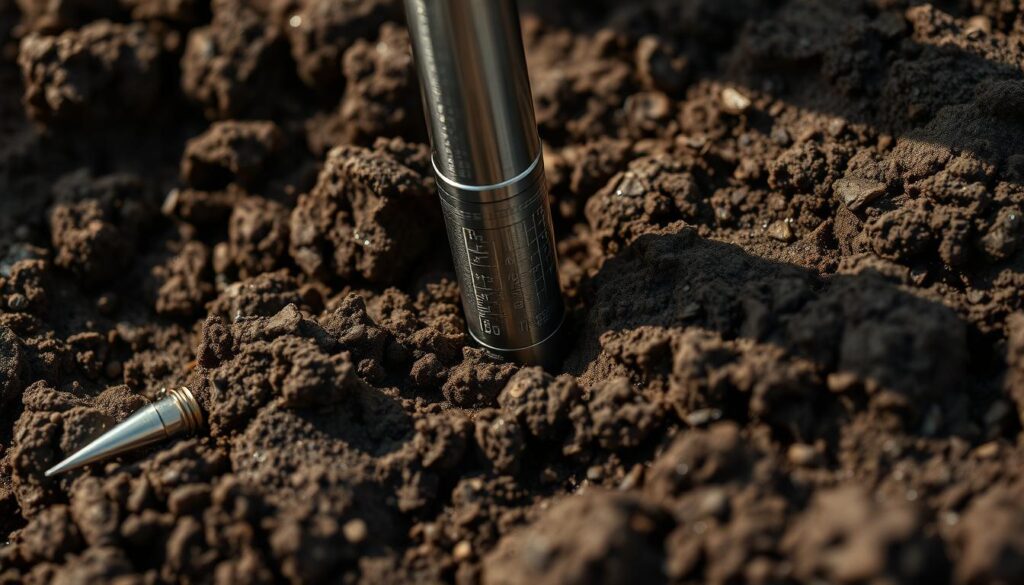
Start by checking which controllers your garden gear already supports. That simple step avoids compatibility problems and keeps the installation quick.
Power choices matter: corded devices like the AC-SLS3 use a 144 in. cable for reliable, low-maintenance operation. Battery options add placement freedom but need periodic swaps or recharges.
Match your controller and the number of zones you plan to monitor. One soil sensor is supported per AC Infinity controller by default; use a splitter to expand coverage as your gardens grow.
Probe size and dimensions affect where you place the device. The AC-SLS3 measures 1.41 x 2.83 x 0.55 in and has an IP67-rated probe that is gentle on roots.
Quick setup tips: route cords along beds, avoid direct sprinkler spray, and place the probe in the active root zone for representative readings. Start with conservative settings and tweak as you gain experience.
| Decision | What to check | Why it matters |
|---|---|---|
| Compatibility | Controller model and zone limits | Ensures the device connects and reports correctly |
| Power | Corded vs battery-backed | Corded = low maintenance; battery = flexible placement |
| Placement | Probe depth and dimensions | Captures true moisture in the root zone without crowding plants |
Conclusion
Bring it all together, and you gain a simple path from measurements to action.
When devices, controllers, and forecasts work together, your irrigation decisions get simpler and smarter. You can view accurate readings in the app, get alerts, and let a controller run devices when levels need attention.
That process reduces wasted water, protects roots with a gentle probe, and gives you confidence during heat or rain. The AC-SLS3 is an affordable product to start with, while platforms like GeoDrops expand forecasting and zone control.
Use the system your way—hands-off automation or smart prompts—and enjoy healthier plants and easier garden development.
FAQ
What is an AI soil sensor, and how does it help your garden?
An AI soil sensor is a probe-based device that measures moisture and other conditions in the root zone, then sends readings to a controller or app. It helps you water only when needed, which prevents overwatering, supports stronger roots, and saves water and time by giving clear, real-time guidance.
How does the device read moisture and deliver guidance?
The probe uses electrical and capacitive measurements to assess moisture and sometimes temperature. Those values are processed into easy-to-read data in the app or controller, showing current levels, trends, and recommended watering windows so you can act with confidence or let automation handle it.
Will the probe damage roots or compact the soil?
No. Modern probes have a gentle, narrow design and a detachable stem to minimize disruption. You place it in the root zone carefully; the goal is monitoring, not excavation, so your plant structure and soil porosity remain intact.
How does this device prevent overwatering and underwatering?
By tracking moisture trends and delivering alerts or automated commands, the system tells your irrigation controller when to run or pause. It can use thresholds you set or recommendations from the app, reducing stress on plants and improving growth consistency.
Can the sensor connect to popular irrigation controllers like Rachio or GeoDrops?
Yes. Many probes pair with cloud services and controllers such as Rachio and GeoDrops through local integrations or webhooks. That lets you enable weather-aware and sensor-guided schedules for hands-free zone control and smarter watering.
How accurate are the readings, and how often do they update?
High-quality devices report with precision around ±5% and can refresh in near real time, often every second to minutes, depending on settings. That accuracy gives reliable ground-truth data you can use alongside weather-based evapotranspiration (ET) models.
What protection and build features should you look for?
Look for IP67 or similar ingress protection, fiberglass or corrosion-resistant housing, and a detachable stem for easy cleaning. Those features keep the unit working in wet conditions, compost, and garden soils while extending service life.
How do you pair the probe with a controller or app?
Pairing typically uses Bluetooth, Wi‑Fi, or a proprietary gateway. You install the app, put the controller into discovery mode, then follow prompts to link the probe. After pairing, set zones, moisture thresholds, and notification preferences for automated control.
Can it pause irrigation after rain or use weather forecasts?
Yes. When integrated with weather services or controllers, the system can apply pause-after-rain logic and adjust schedules using forecast-based ET adjustments. That reduces redundant runs and keeps the root zone at optimal moisture.
What power options are available, and how long will batteries last?
Devices offer battery, wired, or solar-assisted power. Battery life varies by reporting rate and connectivity but often lasts months to years on a single charge for low-frequency updates. Wired or solar models support continuous, higher-frequency monitoring.
Will this work for potted plants, raised beds, and lawns?
Yes. You can use probes in containers, raised beds, and turf. Placement differs: deeper in beds and lawns near the root zone, and centered in pots for accurate moisture averages. Choose a probe length appropriate for root depth.
How do moisture readings translate into action for different plants?
The app or controller lets you set crop- or species-specific thresholds. For example, succulents need lower moisture targets than vegetables. Use those targets to trigger watering events or alerts tailored to plant needs.
Are alerts customizable, and can they integrate with IFTTT or home automation?
Most modern systems offer customizable alerts and integrate with IFTTT, smart hubs, and home assistants. That lets you create rules like pausing a zone, sending notifications, or logging data to cloud services for long-term tracking.
How does real-time data combine with ET and weather data for recommendations?
The system merges probe measurements with ET estimates and local weather to refine watering schedules. Ground truth from the probe corrects model assumptions, producing smarter recommendations and reducing wasted water.
What should you consider when choosing the right device for your garden?
Consider compatibility with your controller, update rate, accuracy, power source, probe length, IP rating, and app features. Also check whether it supports integrations you want, like Rachio, GeoDrops, IFTTT, or cloud logging.
How do you maintain and clean the probe for the best performance?
Rinse the stem after heavy use, remove debris, and avoid harsh chemicals. Re-calibrate if readings drift and replace batteries as recommended. Proper care preserves accuracy and extends device life.
Are there any challenges or risks with using AI in agriculture?
Yes. Challenges include the cost of devices, the need to know how to use them, compatibility with existing equipment, and making sure data is accurate for your specific soil and climate.