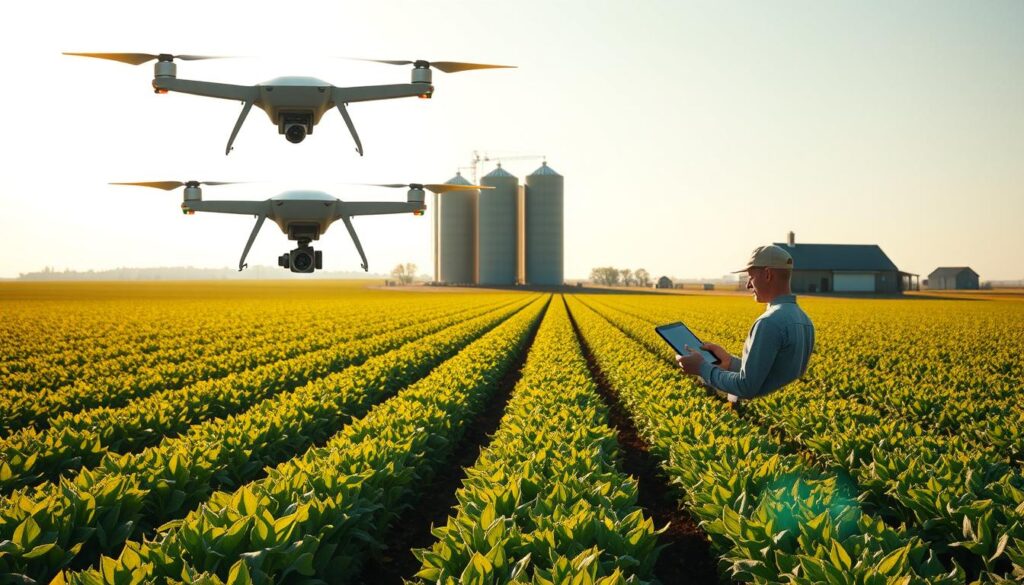

Can smart tools really let you grow more food on the same land and cut costs at the same time? Explore how the Benefits of AI in Agriculture help modern systems turn farm data into clear decisions that boost yields, save time, and cut waste. The market for these tools is growing fast, from $1.7 billion in 2023 to an estimated $4.7 billion by 2028.
On real farms, computer vision, sensors, and management software detect pests, guide planting, and automate chores like sorting. That means you can focus on bigger-picture choices while machines handle routine work.
You’ll see which technologies give quick wins and which align with your field realities. This piece shows how to protect crop quality, lower input costs, and meet rising food demand without expanding acreage.
Key Takeaways
- You’ll learn how data-driven tools improve yield and cut input use.
- Practical tech like sensors and vision already work on farms today.
- Adopt stepwise to get quick wins without overinvesting.
- These solutions help meet rising food demand on existing land.
- Focus on tools that match your operations for measurable results.
Why AI Matters Now for U.S. Farms: Feeding a Growing World with Fewer Resources
U.S. farms face a crunch: more mouths to feed but fewer spare resources. By 2050, you must help supply roughly 60% more food to a projected 9.3 billion population worldwide, yet expanding acreage is not a viable long-term answer.
Pressure on the agricultural sector is real. Agriculture already uses about 70% of accessible freshwater, and much is lost to leaky irrigation. Climate variability raises weather risks, while labor gaps and soil decline add strain.
The opportunity is smarter farming on existing land. High-frequency data and analytics let you spot weather-driven threats earlier and act fast to protect yield and quality.
- Stretch scarce resources—water, labor, and inputs—by applying them where they matter most.
- Turn field variability into an advantage with site-specific strategies.
- Justify investment by starting small: irrigation fixes and pest detection deliver quick ROI.
From population growth to climate volatility: the pressure on the sector
Benefits of AI in Agriculture
Data-driven tools are helping farmers turn field signals into higher yields and better market grades. You can pair historical records with live sensors to make sharper decisions about sowing, fertilizing, irrigation, and harvest timing.
Higher yields, better quality: data-driven crop and harvest decisions
By mapping yield and running what-if analyses, platforms spot in-season stress before it costs you kilos or grades. CropX reports major water and fertilizer savings and big yield gains when soil and vegetation insights guide timing.
Lower costs and reduced inputs through precision and automation
Targeted applications cut waste in fuel, fertilizer, pesticides, and labor. Trapview users show measurable savings and small but meaningful yield uplifts from smarter pest timing.
Sustainability gains: less water, fertilizer, and pesticides
- You improve crop outcomes by pairing historical and real-time data to plan harvest windows for better quality.
- You lower costs by targeting inputs precisely and automating routine tasks.
- You build resilience by scaling sensors, drones, and software into one decision loop for your farming practices.
Precision Farming in Practice: Sensors, Computer Vision, and Algorithms Working in Your Fields
When sensors and vision systems speak the same language, your farming choices get sharper. You gather continuous field data that turns scattered readings into clear, field-by-field prescriptions.
Soil, moisture, and weather data: the foundation
IoT sensors and geospatial analytics track soil and moisture across zones. Satellite and aerial imagery add plant indices so you see stress before it spreads.
You use that data to time irrigation, protect soil structure, and reduce wasted runs.
Variable-rate applications that optimize fertilizer and pesticides
Algorithms convert raw readings into maps for variable-rate spreading. Apply fertilizer and pesticides only where needed to protect margins and limit runoff.
This approach lowers overlap and saves inputs while keeping yields steady.
Computer vision for crop scouting, quality, and grading
Computer vision detects pests, disease, and defects faster than routine walks. In post-harvest lines, vision-based grading sorts by size, color, and blemishes to speed throughput.
Closing the loop, you feed results back into algorithms so recommendations improve each season.
- You collect soil, moisture, and weather readings continuously.
- You convert those readings to variable-rate plans for fertilizer and pesticides.
- You deploy computer vision for scouting and automated grading to raise response speed and consistency.
| Tool | Primary role | Immediate impact |
|---|---|---|
| Sensors & IoT | Soil & moisture tracking | Better irrigation timing |
| Computer vision | Scouting & grading | Faster detection and sorting |
| Algorithms | Prescription generation | Reduced input waste |
Water and Soil Intelligence: Smarter Irrigation, Leak Detection, and Regenerative Practices
Real-time soil and flow data let you water only where crops truly need it. That cuts waste, protects plant health, and frees labor for other tasks.
AI-optimized irrigation uses soil moisture readings, weather forecasts, and predictive models to set irrigation schedules that match plant demand. You get automated run times and zone-level control so your systems respond to short-term weather and soil signals.
Detecting leaks and reducing waste across your irrigation systems
Flow and pressure analytics flag anomalies before bills spike. You can pinpoint a faulty valve, a broken emitter line, or a high-flow zone and act fast.
What’s possible now: reported water and fertilizer reductions with modern platforms
Platforms like CropX report major gains: up to 57% less water use and about 15% lower fertilizer use while improving yields. You verify results with side-by-side strip tests and season-over-season data.
- You automate irrigation to follow real-time moisture and weather cues.
- You flag leaks and inefficient zones to stop hidden losses.
- You align fertilizer timing with irrigation to reduce leaching and boost uptake.
| Metric | How it’s measured | Typical impact |
|---|---|---|
| Water use | Soil moisture + weather-driven schedules | Up to 57% reduction per platform reports |
| Fertilizer loss | Combined irrigation and nutrient timing models | ~15% reduction with targeted scheduling |
| Yield uniformity | NDVI, SAVI, and soil maps | Improved zone uniformity and higher marketable yield |
Pests, Weeds, and Disease: Targeted Detection and Control with Machine Learning
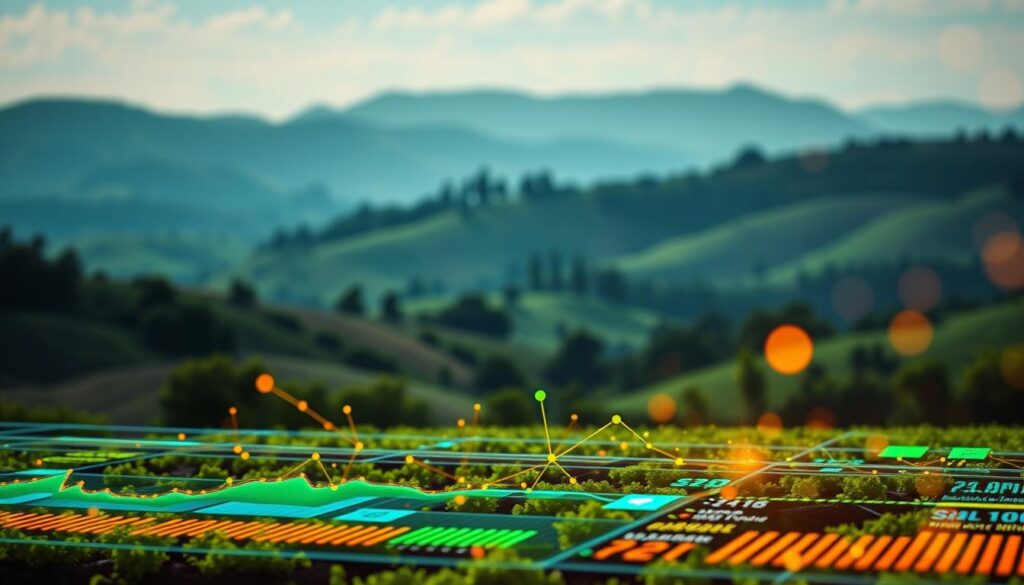
Timely alerts from traps and models can stop outbreaks that would otherwise cut harvest value. You identify pests earlier using smart pheromone traps, onboard cameras, and weather-linked predictive models that translate field images and local data into clear actions.
Early identification with images, traps, and predictive models
Trapview combines pheromone traps and cameras to spot 60+ pest species and sends location-based risk alerts. That approach has shown measurable gains: small yield and quality boosts and large cost savings across regions.
Laser and robotic weed control
Carbon Robotics’ LaserWeeder uses deep learning to target weeds with high-speed lasers. You can remove thousands of weeds per minute, cut weed-control costs by up to 80%, and see ROI in one to three years while reducing blanket pesticide use.
Disease detection at scale with computer vision
Computer vision on drones and smartphones flags infections like apple black rot at better than 90% accuracy in studies. You act on alerts, apply treatments only where needed, and protect both yield and worker safety.
- You focus sprays on hotspots, lowering pesticide use and long-term costs.
- You deploy robots and sensors to reduce labor and chemical exposure.
- You build season-long pest and disease intelligence so recommendations improve with more data.
| Tool | Typical impact | Key metric |
|---|---|---|
| Smart traps + models | Earlier detection, targeted actions | 60+ species identified |
| Laser weeder robots | Reduced herbicide use, faster weeding | 99% accuracy; ~2 acres/hour |
| Computer vision (drones/phones) | Scalable disease screening | >90% detection accuracy |
Automation on the Farm: Drones, Robots, and Autonomous Equipment to Save You Time
Driverless tractors and smart drones are taking over repetitive chores so your crew can focus on decisions that matter.
Automation spans field and controlled-environment systems. You’ll find driverless tractors for tillage, smart spraying units that cut overlap, greenhouse robots that handle planting, and vertical farming machines that scale controlled yields.
From driverless tractors to smart spraying and vertical systems
Autonomous equipment reduces passes across the field, saving you valuable time and fuel. Smart spraying targets only problem areas to limit drift and input overlap.
Harvesting and sorting: how robots improve speed and consistency
Vision-guided robots speed harvest and standardize grading. Automated lines use computer vision to match buyer specs and raise pack-out quality.
- You save time with machines that handle prep, scouting, spraying, and weeding with fewer passes.
- You fill labor gaps by assigning repetitive, strenuous work to robots while your team handles higher-value tasks.
- You improve harvest timing and sorting accuracy with vision-guided systems that reduce human error.
- You integrate drones and equipment with farm software so tasks trigger from prescriptions and alerts.
| Automation type | Primary role | Key impact |
|---|---|---|
| Driverless tractor | Field prep & planting | Fewer passes; consistent operations |
| Smart sprayer | Targeted chemical application | Reduced overlap and drift |
| Sorting robot | Post-harvest grading | Higher pack-out quality |
| Drone fleet | Frequent imagery & scouting | Faster responses to field issues |
Data to Decisions: Predictive Analytics, Yield Mapping, and Farm Management Software
You can use drone, satellite, and soil readings to forecast yield and set crew priorities with confidence. Microsoft’s FarmVibes.AI combines those inputs into soil and yield maps and runs what-if scenarios that show likely crop stress from weather, water limits, pests, or disease.
Field-level models fuse sensor, drone, and satellite feeds to forecast yield and flag early stress. That helps you target high-response zones so inputs go where they matter most.
Run planting-date, hybrid, and irrigation scenarios before committing resources. Use the output to set work orders, operator checklists, and harvest timing in your farm management platform.
- Translate complex analytics into clear insights your crew can follow.
- Prioritize zones for inputs and update plans as weather and crop signals change.
- Compare predicted versus actual yields to tune models and algorithms each season.
| Function | What it uses | Practical output |
|---|---|---|
| Yield mapping | Drone imagery, satellites, soil sensors | Zones for variable-rate inputs |
| What-if analysis | Historical yields, weather forecasts, models | Optimal planting and harvest dates |
| Farm management | Unified data streams and algorithms | Work orders, logistics, marketing timing |
Beyond the Field: Livestock Monitoring, Supply Chains, and Risk Management
Livestock monitoring now links camera feeds, drones, and analytics so you catch health issues early. Tools like CattleEye analyze behavior and gait to flag illness and welfare needs. That can improve milk yield and lower veterinary costs.
Livestock health insights from cameras, drones, and machine learning
You extend crop-style sensing to animals with continuous visual monitoring. Alerts let you isolate sick animals fast and track herd trends over time.
Smarter supply chains: forecasts, pricing, and compliance
Knowledge graphs and predictive models help plan inputs, find best sell locations, and meet traceability rules. Digitized records speed audits and build buyer trust.
Balancing opportunities and risks
Automation delivers clear gains, but it brings social and governance issues. You must plan workforce transitions and guard against ownership concentration.
- Set data-sharing rules to protect farm privacy and control who can access your records.
- Prioritize investment in solutions that solve your biggest bottlenecks first.
- Work within the sector to shape standards that keep access fair for small farmers.
| Area | What it does | Practical impact |
|---|---|---|
| Livestock monitoring | Camera, drone analytics | Earlier disease detection; better welfare |
| Supply chain forecasting | Knowledge graphs, price models | Smarter timing, better margins |
| Governance | Data rules, training programs | Reduced job displacement; safeguarded privacy |
Conclusion
Across U.S. operations, focused solutions deliver measurable gains in soil health, irrigation, and pest control. CropX, Trapview, Carbon Robotics, Microsoft’s FarmVibes.AI, and CattleEye show how targeted tools cut water and fertilizer, lower weed costs, and speed decisions.
You can start small: pilot sensors, test computer vision scouting, and run what-if models before wider investment. That approach helps you match technologies to your conditions and protect soil and water while raising crop quality.
Set clear data rules, train crews, and integrate solutions into your farm software. Do this and you help farmers across your operation turn data into timely actions that save time, lower costs, and make your farm more resilient.
FAQ
What are the main ways smart technologies improve crop yields and quality?
You get actionable insights from soil sensors, satellite imagery, and drone surveys that guide planting density, irrigation timing, and harvest windows. Machine learning models analyze past seasons and current conditions to recommend crop varieties and inputs that raise yield and improve marketable quality.
How do precision tools cut your input costs like water, fertilizer, and pesticides?
Variable-rate systems apply nutrients and chemicals only where needed based on soil maps and plant stress signals. That reduces waste, lowers chemical bills, and minimizes runoff. Automated sprayers and targeted treatments also reduce labor and machine hours.
Can automated systems really detect pests and diseases early enough to prevent large losses?
Yes. Camera-based scouting, trap sensors, and predictive models flag abnormalities before outbreaks spread. Early detection lets you apply targeted fixes — spot treatments, biological controls, or quarantine — rather than whole-field interventions.
Will robotic equipment and drones replace farm labor or just change how you work?
Automation augments your workforce by taking over repetitive, hazardous, or time-sensitive tasks like spraying, monitoring, and sorting. That raises productivity and lets your crew focus on higher-skill work. It shifts labor needs rather than eliminating them outright.
How reliable are predictive analytics for planning planting and harvest dates?
Predictive tools combine historical yield maps, current sensor feeds, and weather forecasts to produce probability-based windows for planting and harvesting. They improve timing decisions, though you should use them alongside your local knowledge and contingency plans.
What infrastructure do you need to run these technologies on a typical U.S. farm?
Basic needs include reliable internet (cellular or fixed wireless), power for sensors and gateways, GPS-enabled equipment, and a farm management platform or app. Larger systems may add drones, on-farm servers, or edge devices for real-time processing.
How do these tools support water-saving irrigation strategies?
Soil moisture probes, weather forecasts, and evapotranspiration models let you automate irrigation to match crop demand. You cut leaks and overwatering by scheduling flows, using pressure sensors, and closing zones when moisture targets are met.
Are there measurable sustainability gains you can expect from adopting these practices?
Many growers report lower water and fertilizer use, reduced pesticide applications, and improved soil health through precision inputs and regenerative practices. Those gains come from targeted interventions and continuous monitoring that guide adaptive management.
What about data privacy and who owns the information collected on your farm?
Ownership depends on vendor contracts. Read terms carefully: some platforms grant you ownership while others license aggregated data. Use providers that offer clear data rights, opt-out options, and strong cybersecurity.
How do smart systems help with supply chain planning and price forecasting?
Market models ingest yield forecasts, weather trends, and shipment data to produce supply estimates and price scenarios. That helps you time sales, contract volumes, and manage risk through hedging or forward contracts.
Can these solutions be scaled to small or specialty farms, like vineyards or vegetable growers?
Absolutely. Many sensors, computer vision tools, and decision-support apps are tailored for specialty crops. Variable-rate controllers and robotic pickers come in sizes and configurations suitable for high-value, labor-intensive operations.
What investments and training should you plan for successful adoption?
Expect upfront costs for hardware, connectivity, and software subscriptions. Budget for operator training and process changes. Start with pilot projects on a field or block, measure ROI, then scale based on results.
Which vendors and platforms are commonly used across U.S. farms today?
Companies like John Deere, Climate FieldView, and Raven Industries offer integrated hardware and software. Drone makers such as DJI and analytics providers like Granular and IBM’s The Weather Company also feature in many farm stacks.
How do you integrate legacy equipment with newer automation and analytics tools?
Many providers offer retrofit kits, GPS guidance add-ons, and telematics modules that connect older tractors and sprayers to modern platforms. Middleware and APIs help bring disparate datasets into one dashboard for unified decision-making.
What role does computer vision play in harvest grading and quality control?
Computer vision systems inspect fruit, grain, and leaf health at high speed, identifying defects, color, size, and contaminant presence. That improves sorting accuracy, reduces waste, and ensures consistent product quality for buyers.

Pingback: Learn About AI Farming Technology for Modern Farming Needs