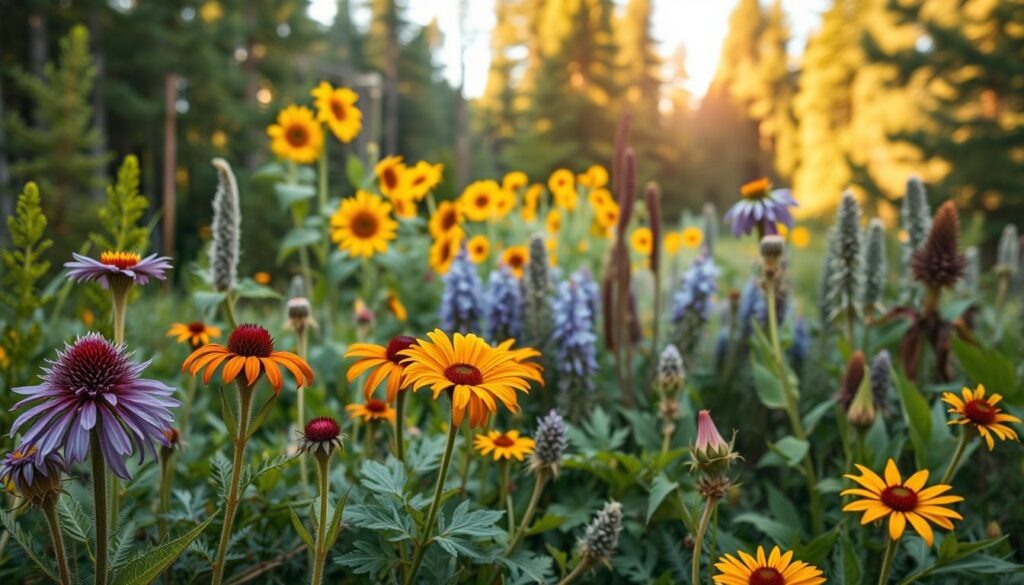

Did you know a few well-chosen yard species can turn your outdoor space into a bird and pollinator magnet?
In this article, you’ll discover how regions across North America shape which North American plants thrive in your yard, and why choosing native plants often feeds more insects and wildlife than exotic options.
From ruby-throated hummingbirds sipping tubular columbine to cedar waxwings favoring serviceberries, the right selections bring real wildlife benefits. Audubon’s native plants database helps you match recommended species to your ZIP code so you can pick what fits your climate in the United States.
In this guide, you’ll get friendly, practical tips on sun, soil, and moisture, plus simple ideas for containers and small beds. By the end, you’ll be ready to pick starter North American plants that support birds, butterflies, and a thriving backyard food web.
Key Takeaways
- Choose regionally appropriate species to boost habitat value.
- Use your ZIP code to find resilient, climate-fit options.
- Mix structural layers—trees, shrubs, flowers—to support wildlife.
- Native choices generally feed more insects and birds than exotics.
- Plan for seasonal interest from spring blooms to winter seedheads.
- Start small with containers or a single bed and scale over time.
Getting Started: How to choose native plants for your United States garden
Start your garden by matching local conditions with species that actually thrive where you live. A little planning up front saves time and helps you build a habitat that supports wildlife.
Match your ZIP code to species using trusted native plant databases
Plug your ZIP code into a reputable native database like Audubon’s to get a quick list of species tailored to your region. This gives you plants that provide nesting material, shelter, and natural food, attracting birds and beneficial insects.
Sun, soil, and moisture: setting the right conditions from day one
- Check sun hours—full sun, part shade, or deep shade—so you pick compatible species.
- Test drainage and dominant soil texture before you buy to match needs.
- Start small: a single bed or container helps you phase in natives without overwhelm.
- Group plants with similar water and light needs to simplify care and improve establishment.
- Order regionally grown stock from local nurseries and read tags for mature height and width.
Trees that anchor your landscape and feed birds
Choose trees that act as habitat pillars, offering seeds, shelter, and seasonal interest. Small stands or single specimens can support more wildlife than you expect.
Oaks (Quercus spp.): biodiversity hubs up to 80 feet tall
Oaks reach 40–80 feet tall and host an enormous range of insect species. Their acorns feed jays and woodpeckers, while cavities shelter bluebirds and owls.
Pines (Pinus spp.): year-round cover and seeds for finches and chickadees
Eastern white pine supports nearly 50 bird species. Out west, Ponderosa and sugar pine give similar benefits. Avoid non-native Scotch Pine for better wildlife results.
Dogwoods (Cornus spp.): spring bracts and fall–winter berries for songbirds
Dogwoods put on showy bracts in spring and hold colorful drupes into winter. More than 35 bird species eat the fruit, and leaves add seasonal color.
Willows (Salix spp.): flood-tolerant, with catkins and nesting fluff
Willow thrives in wet spots and resprouts from cuttings. Many bear catkins; pussy willow has male and female trees, and hummingbirds may use catkin fluff in nests.
| Tree | Typical Height | Key Benefits | Notes |
|---|---|---|---|
| Oak (Quercus) | 40–80 feet | Acorns, insect biomass, cavities | Great for long-term habitat |
| Pine (Pinus) | 50–80 feet | Year-round cover, seeds | Choose region-appropriate species |
| Dogwood (Cornus) | 15–30 feet | Bracts, berries, fall color | Birds eat fruit into winter |
| Willow (Salix) | 10–70 feet (varies) | Catkins, flood tolerance, nesting fluff | Root easily from cuttings |
Flower power: pollinator-friendly natives for spring through fall
A long season of blooms can keep your yard buzzing from spring through fall. Pick species that flower at staggered times so nectar and seeds are available throughout the year.
Milkweeds (Asclepias spp.) are monarch magnets. Choose native types like common, swamp, or butterfly weed and avoid tropical milkweed to help migration and reduce parasite risks.
Coneflowers and sunflowers
Coneflowers (Echinacea, Rudbeckia) supply summer nectar and leave seedheads that feed goldfinches and cardinals in winter.
Sunflowers (Helianthus) range from 1 to 10+ feet tall. Pick native species suited to your site and plant them in full sun for best results.
Sages, blazing star, and columbines
Salvia species use a lever-like floral mechanism to dust hummingbirds while offering drought tolerance for dry beds.
Liatris blooms top-down and thrives in dry, rocky soils with excellent drainage.
Aquilegia (columbine) brings tubular spring flowers that supply early nectar for hummingbirds.
Late-season fuel and shade contrast
Goldenrods and asters are vital fall food; goldenrods support roughly 115 Lepidoptera species and asters about 112. They keep butterflies and bees fed late into autumn.
Adiantum pedatum (maidenhair fern) adds lush texture in rich, moist shade and pairs well with spring bloomers for visual contrast.
- Choose native milkweed species; avoid tropical types.
- Site sunflowers in full sun and check local Helianthus species.
- Leave seedheads standing for winter bird food.
- Combine bloom times for continuous nectar from spring to fall.
| Species Group | Bloom Season | Key Benefit |
|---|---|---|
| Milkweed (Asclepias) | Spring–summer | Monarch host plant; nectar for many butterflies |
| Coneflowers (Echinacea/Rudbeckia) | Summer–fall | Nectar in summer; seeds for finches in winter |
| Sunflower (Helianthus) | Summer–fall | Tall nectar towers; large seeds for birds |
| Salvia (Sage) | Summer | Hummingbird pollination; drought tolerant |
| Liatris | Mid–late summer | Top-down blooms; thrives in lean, rocky soil |
Berries birds can’t resist (and some you’ll love, too)
Berry shrubs bring color, food, and nesting perches that draw songbirds through the seasons. Below are four standout species groups that give you spring flowers, summer fruit, and late-season seeds for wildlife and people.
Serviceberries (Amelanchier spp.)
Serviceberries bloom with showy white flowers in spring and set sweet, edible fruit that robins, waxwings, and tanagers love. Their branching gives good nesting structure and early perches for birds.
Elderberries (Sambucus spp.)
Elderberries (S. canadensis) form dense clusters that feed a wide array of birds. Note: the raw fruit is toxic to people, so cook before eating. They do best in richer, damp sites.
Blueberries & sparkleberries (Vaccinium spp.)
Blueberries and sparkleberries deliver four-season interest: spring flowers, summer fruit, bright fall color, and seeds that persist for wildlife. Match species to your region and give blueberries acidic soil and steady moisture.
Winterberry (Ilex verticillata)
Winterberry is a deciduous holly that produces showy red fruit—only fertilized female plants set berries. Plant at least one male nearby to get a full display for birds into late fall and winter.
- Plant clusters or hedgerows to boost cross-pollination and yield.
- Space shrubs for mature size to ease pruning and harvest.
- Leave some fruit on the shrub to feed birds into late fall and winter.
- Underplant with perennials to suppress weeds and support pollinators.
| Species | Key Season | Wildlife Value | Site Notes |
|---|---|---|---|
| Serviceberry (Amelanchier) | Spring–Summer | Attracts robins, waxwings, tanagers; nesting structure | Well-drained soil; sun to part shade |
| Elderberry (Sambucus) | Summer | Birds feed on clusters; fruit toxic raw to people | Prefers rich, moist soils |
| Blueberry / Sparkleberry (Vaccinium) | Spring–Fall | Flowers for pollinators; fruit for birds; fall color | Acidic soil; consistent moisture |
| Winterberry (Ilex verticillata) | Fall–Winter | Bright red berries for birds; winter food | Plant male and female within pollination range |
Grasses and vines that add movement, structure, and seeds
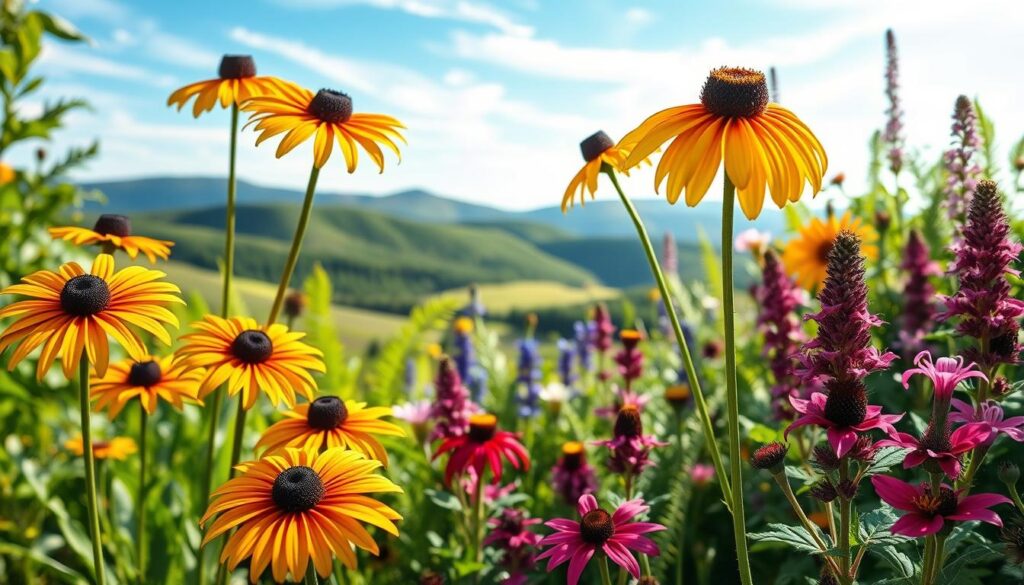
A ribbon of grasses and a few vines can turn flat beds into lively, year-round habitat. These species add motion, shelter, and late-season food without heavy work.
Switchgrass (Panicum spp.)
Panicum virgatum thrives in full sun and produces abundant seeds in fall and winter. You’ll see songbirds feeding on the seedheads when other food wanes.
Avoid non-native Panicum forms like torpedo grass. Plant in clumps and allow seedheads to persist for winter cover and food.
Muhly grass (Muhlenbergia spp.)
Muhlenbergia tolerates drought and salt, making it great for lean, sandy sites. Its late-season plumes provide seeds that sparrows and finches favor.
Use muhly as a textured backdrop and combine with flowering perennials for seasonal contrast.
Honeysuckles (Lonicera spp.)
Avoid invasive vines such as Amur, Tatarian, Morrow’s, and Japanese honeysuckle; they often have hollow stems. Choose native trumpet honeysuckle (L. sempervirens) or yellow honeysuckle (L. flava).
Native honeysuckles give nectar to hummingbirds and produce seasonal berries for other wildlife. Train them on trellises to add vertical interest without crowding paths.
- Plan clump size and height so grasses frame paths, not block them.
- Leave seedheads through winter where safe to boost habitat value.
- Stagger bloom and seed times to spread food resources across seasons.
- Match species to sunny, well-drained sites to cut watering needs.
| Species | Height (typical) | Key wildlife value | Site note |
|---|---|---|---|
| Switchgrass (Panicum virgatum) | 3–6 feet | Seeds for songbirds; winter cover | Full sun; clumping; avoid torpedo grass |
| Muhly grass (Muhlenbergia spp.) | 2–4 feet | Fall plumes; seeds for finches and sparrows | Drought and salt tolerant; great in sandy soil |
| Trumpet honeysuckle (Lonicera sempervirens) | 6–12 feet (vine) | Nectar for hummingbirds; seasonal berries | Train on trellis; native alternative to invasive vines |
Spotlight on pussy willow: spring catkins, nesting fluff, and fast rooting
Pussy willow lights up late winter with fuzzy catkins that arrive before leaves and signal spring is near.
You’ll recognize this shrub by silky, silver catkins that buzz with early pollinators. The soft seed fluff and fine twigs are prized by hummingbirds and other birds for nest lining.
Many willows are separate male female trees, so pollen and seed set depend on pairing. Cut branches root readily in water, making this an easy shrub to propagate for hedges or a small screen.
- Site: place where soils stay moist or seasonally wet, like a swale or rain garden edge.
- Care: coppice periodically to keep stems vigorous and flowering.
- Use: force branches indoors for early blooms and pair with red twig dogwood and bulbs for contrast.
| Feature | Notes | Wildlife value |
|---|---|---|
| Height | Modest, shrub-sized | Branching aids nesting |
| Propagation | Roots easily from cuttings in water | Quick to expand hedges |
| Flowers / Catkins | Appear before leaf-out in spring | Feed insects that fuel migrating birds |
Monitor for suckers and prune after catkins fade to maintain shape and vigor. Leave some stems for insects that help migrating wildlife in early spring.
Black-eyed Susan and friends: easy charm that reblooms year after year
A single clump of Rudbeckia hirta can light up borders from July into October. These black-eyed susan flowers are bright, daisy-like, and thrive in heat and drought once they’re established.
You’ll like how they often reseed to form cheerful drifts without taking over. Leave many seedheads standing in fall to feed goldfinches, sparrows, and other birds through winter.
Site them in full sun and average soil. They need little extra water after the first season and pair well with coneflowers, coreopsis, and native grasses for a prairie-inspired look that butterflies love.
- Deadhead selectively to extend bloom while saving seeds for wildlife.
- Divide or thin clumps every few years to refresh vigor and share with neighbors.
- Try compact or tall cultivars for containers, borders, or background massing.
| Feature | Notes | Wildlife value |
|---|---|---|
| Rudbeckia hirta | Yellow daisy-like flowers with dark centers; heat and drought tolerant | Seeds eaten by goldfinches and sparrows; nectar for pollinators |
| Companions | Coneflowers, coreopsis, native grasses | Extended bloom season; nectar for butterflies |
| Care | Full sun, average soil; divide every few years; selective deadheading | Seedheads left provide winter food and habitat value |
Design a butterfly and hummingbird garden that thrives in full sun
Layering low blankets and tall nectar towers turns a hot, sunny patch into a pollinator runway. Start by mapping groundcovers and low perennials, then add mid-height bloomers and 5+ foot nectar towers like sunflowers or giant coneflowers.
Staggered bloom times keep food available from spring through fall. Use early bloomers such as columbine and penstemon, mid-season coneflowers and salvias (their pollen “lever” helps dust hummingbirds), and fall goldenrods and asters. Goldenrods support about 115 Lepidoptera species and asters about 112, so they are core late-season resources.
Planting and maintenance tips
- Structure: Mix low blankets, medium perennials, and tall sunflower or grass towers to give butterflies and birds routes and perches.
- Continuous blooms: Combine spring, summer, and fall species so blooms and seeds never run out.
- Water and habitat: Water deeply but infrequently, add a shallow water dish and flat stones for basking, and leave bare soil patches for ground-nesting bees.
- Care: Use light deadheading, add a few annuals for quick color the first year, and avoid pesticides to keep pollinators safe.
| Feature | Example species | Benefit |
|---|---|---|
| Low layer (groundcovers) | Creeping thyme, phlox | Provides nectar corridor and weed suppression |
| Mid layer (perennials) | Pentas, salvias, coneflowers | Continuous blooms; hummingbird and butterfly nectar |
| Tall layer (nectar towers) | Sunflowers, switchgrass | Vertical nectar and seeds; perches for birds |
| Late-season staples | Goldenrod, asters | High Lepidoptera support; fall nectar and seeds |
Shade solutions: native ground covers and woodland accents
A shady corner is an opportunity to layer texture, color, and seasonal interest. Use low, shade-tough species to create a living carpet under trees and shrubs.
Adiantum pedatum, commonly called maidenhair fern, prefers rich, moist soil and gives lacy, graceful leaves that move in light breezes. Plant it as a fine-texture anchor where drip lines keep the earth cool.
Creeping phlox, woodland iris, and coral bells for season-long color
Creeping phlox offers early spring color and then settles into a neat green mat that suppresses weeds. Woodland iris blooms in late spring and tolerates part shade to sun, adding slender, strappy foliage.
Coral bells (Heuchera americana) supply year-round interest with richly colored leaves and small, airy flower stalks. Together, these species create a layered bloom and foliage contrast while leaving room for tucked-in spring ephemerals.
- Soil: improve beds with compost and leaf mold to mimic forest duff and hold moisture.
- Cluster groups to create mass and reduce weeding, but leave gaps for volunteer seedlings and seeds.
- Water lightly but regularly when establishing, then taper to encourage deep roots.
- Avoid over-mulching crowns—too much can trap moisture and invite rot in shade.
- Define beds with edging or paths to make maintenance easier and show off the planting.
| Species | Key Benefit | Site Notes |
|---|---|---|
| Adiantum pedatum | Lacy fronds; fine texture | Rich, moist soil; excellent under trees |
| Creeping phlox | Early bloom; ground-hugging foliage | Part shade to full sun; good for slopes and edges |
| Heuchera americana | Colorful leaves; perennial performance | Part shade; pairs well with ferns and bulbs |
Seasonal showstoppers: white flowers in spring, berries in fall, color in winter
Some shrubs give dramatic white flowers in spring, durable fruit in summer that persists into fall, and bold winter structure that brightens snowy yards.
Viburnum trilobum ‘Wentworth’
Viburnum trilobum ‘Wentworth’ produces prolific white bloom clusters in spring and abundant red berries that hang into fall. It reaches roughly 8–15 feet and shows rich dark red fall leaves.
- Plant for multi-season impact: spring flowers, summer fruit, and fiery fall color.
- Site as a focal hedge or specimen, allowing room for mature width.
- Prune after flowering if needed to protect developing fruit for wildlife.
Red twig dogwood (Cornus sericea)
Red twig dogwood brings purple-red fall foliage, creamy white berries that attract birds, and striking crimson stems for winter interest. It’s hardy in Zones 3–8 and excellent for winter contrast.
- Cluster several shrubs for a bigger berry crop and stronger visual impact.
- Pair with spring bulbs and summer perennials to bridge seasonal highlights.
- Mulch and water the first season to set strong roots; leave some fruit and seedheads for wildlife through late fall and early winter.
| Shrub | Height | Key seasons |
|---|---|---|
| Viburnum ‘Wentworth’ | 8–15 ft | White flowers → red berries → red fall leaves |
| Red twig dogwood | 6–12 ft | Purple-red leaves → creamy berries → crimson winter stems |
North American plants you can grow in pots, beds, and borders
Turn a group of containers into a layered mini-garden that fits tight spaces and busy lives. With the right choices, a patio or narrow border can offer nectar, seeds, and shelter for wildlife while brightening your home.
Container-friendly picks for patios and small spaces
Choose compact natives such as Echinacea purpurea (coneflower), creeping phlox, coral bells, and small ornamental grasses for steady color and seedheads that attract birds.
- Use a lightweight, well-draining mix and match pot sizes to reduce root stress and watering.
- Group pots to create a layered habitat with nectar-rich flowers, seed-producing perennials, and sheltering foliage.
- Add slow-release organic fertilizer and refresh the top 1–2 inches of media each spring.
- Use pot feet to improve drainage and protect decking; rotate containers seasonally for spring ephemerals and summer bloomers.
- Pick dwarf shrubs like winterberry in narrow forms if you want structure, and remember pairing needs for fruit production.
- Prune, deadhead, and overwinter hardy pots near walls or heel tender containers into sheltered spots.
| Use | Good picks | Why it works |
|---|---|---|
| Sunny pots | Echinacea, sun-loving grasses | Heat-tolerant flowers and seedheads for birds |
| Shady containers | Adiantum (maidenhair fern) | Likes rich, moist media and cool light |
| Small structure | Compact winterberry | Dwarf form gives berries if a male is nearby |
Bird-forward planting: native food, seeds, and shelter all year
A few deliberate choices of trees, shrubs, and grasses create a backyard pantry that supports birds year-round. Focus on species that offer acorns, cones, berries, catkins, and seedheads so food is available in every season.
Seed heads, catkins, and berries that sustain birds through winter
Keep seedheads standing into winter to turn beds into natural feeders when resources are scarce. Oaks and pines provide acorns and cones, while dogwoods and willows add berries and early catkins.
- You’ll combine shrubs with reliable berries and trees that produce acorns or cones to create a steady year-round pantry.
- You’ll add early catkin-bearers like pussy willow to support insects that in turn feed migrating and nesting birds.
- You’ll plant grasses like switchgrass and muhly for dense cover and abundant seeds that draw finches and sparrows.
- You’ll design with layered structure—canopy, midstory, and groundcover—providing shelter from wind and predators.
- You’ll add small brush piles or a few tucked branches to increase habitat complexity without sacrificing design.
- You’ll cluster plantings to create foraging “hotspots” that help birds move safely through your yard.
- You’ll place water sources and keep them clean, especially during freezes and droughts.
- You’ll avoid pesticides that reduce the insect prey vital to most nestlings, even in seed-eating species.
- You’ll time pruning to protect active nests and leave fruiting wood intact to maximize seasonal food.
| Feature | Example species | Why it matters |
|---|---|---|
| Large mast producers | Oaks, Pines | Provide acorns and cones—high-calorie winter food for many birds |
| Fruit & catkins | Dogwoods, Willows | Offer berries and early-season catkins that feed insects and birds |
| Seedheads & cover | Switchgrass, Muhly grass | Hold seeds into winter and give dense shelter for small birds |
Understanding “native”: nuance, regions, and plant selection in the native U.S.
A plant’s origin can change how well it supports insects, birds, and soil life near your home. Many genera include species that are native only to specific ecoregions, so “native” is not one-size-fits-all.
Why locality matters: native eastern vs. native western choices
Local lists matter. Use your ZIP code in resources like Audubon to get species tailored to your area. That lowers losses, cuts water needs, and boosts food for local insects and nestlings.
- What’s native in the eastern coastal plain may fail in a dry mountain foothill.
- Choose the species naturally found in your ecoregion for best wildlife support.
- Verify nursery tags and provenance to avoid mislabeled or broadly ranged species.
| Decision factor | Eastern example | Western example | Why it matters |
|---|---|---|---|
| Soil & moisture | Moist-loam tolerant serviceberry | Dry-tolerant manzanita | Matches root needs; reduces irrigation |
| Insect associates | Region-specific oaks host local caterpillars | Ponderosa pine supports western beetles | Supports bird diets and nestling nutrition |
| Visual match | East-compatible dogwood for spring show | West-compatible ceanothus for blue blooms | Keeps intended aesthetic while supporting ecology |
| Risk of misuse | Broad-range species that outcompete locals | Introduced lookalikes sold as native | Can reduce native biodiversity and harm birds |
Tip: Keep a simple garden map with species, source, and ZIP-based notes. This makes later replacement, maintenance, and habitat planning much easier.
Male and female plants: how to ensure flowers, seeds, and berries
When male and female shrubs are correctly paired, blossoms turn into a bounty of berries and seeds you and local birds will enjoy. You’ll spot that some species have separate sexes (dioecious), so planning matters at purchase and planting.
From pussy willow to winterberry: pairings that produce
Many willows, including pussy willow, have distinct male and female plants. Male trees supply pollen; female trees set seed and fruit. Winterberry (Ilex verticillata) is another classic example—you need a nearby compatible male for females to show off heavy red berries each fall.
- Learn to identify dioecious shrubs and label each at planting.
- Match bloom times so pollen is available when flowers open.
- Group two or three shrubs to boost pollination and fruit set.
- Choose selections that are native U.S. to your region for reliable performance and pollinator support.
- Prune after flowering to protect forming fruit and keep plants vigorous.
| Species | Male role | Female role |
|---|---|---|
| Pussy willow | Provides pollen; earlier catkins | Sets seed; birds use catkin fluff |
| Winterberry | Pollen donor; few berries itself | Produces showy red berries when pollinated |
| Other dioecious shrubs | Pollen source | Fruit/seed producer |
Soil, water, and maintenance tips for a resilient native plant garden
A few practical maintenance habits extend bloom, seed, and shelter value year after year. Start by testing the soil and amending with compost only where needed. Many species, like Liatris, prefer lean, well-drained mixes; sages tolerate drought, and Panicum grasses need full sun.
Water deeply and less often while plants establish, then taper to encourage deep roots that carry your garden through tough seasons. Group species by water need so irrigation is targeted and efficient.
- Match expected height and spread to the space to reduce staking and future pruning.
- Mulch lightly to suppress weeds while allowing volunteer seedlings of desirable species.
- Time cutbacks so you leave seeds and stems for winter shelter, then tidy in late winter before new growth.
- Monitor pests gently—favor beneficial insects and bird predation over sprays.
- Topdress beds each year, divide crowded clumps, and keep notes on which variety thrived in your microclimate.
| Species | Soil preference | Care note |
|---|---|---|
| Liatris | Well-drained, sometimes rocky soil | Plant in full sun; leave seedheads for winter |
| Sage (Salvia) | Lean, dry sites | Drought-tolerant; minimal mulch |
| Switchgrass (Panicum) | Sunny, well-drained | Clump-forming; seeds feed birds |
Celebrate a little wildness: standing seedheads, stems, and leaf litter feed insects and birds through the off-season and keep your garden resilient all year.
Conclusion
Create a layered yard that balances beauty with habitat value from spring blooms to winter seedheads.
Across the united states, regionally native trees, shrubs, flowers, and grasses — from oaks and dogwoods to Echinacea, Solidago, Panicum, and Muhlenbergia — give nectar, seeds, berries, and shelter that sustain birds and pollinators through spring, fall, and winter.
You’re ready to combine structure and color in pots, beds, and borders. Use containers to test combos, note expected height and spread in feet, and then scale to larger beds as confidence grows.
Tip: pick staggered bloom times, pair dioecious shrubs correctly, and leave seedheads standing. The result is a resilient, native-friendly garden that feeds hummingbirds, finches, and a wide variety of wildlife year after year.
FAQ
How do I choose the right native species for my garden?
Start by matching your zip code to trusted native plant databases like the Native Plant Finder from the National Wildlife Federation or Lady Bird Johnson Wildflower Center. Look for species recommended for your local ecoregion, then pick plants that match your yard’s sun, soil, and moisture conditions.
What are the basic sunlight and soil needs for most native flowers?
Many native wildflowers such as coneflowers, blazing star, and sunflowers prefer full sun and well-drained soil. Shade lovers like maidenhair fern and woodland phlox need rich, moist, shaded spots. Test soil drainage and pH, then amend lightly to match the plant group you choose.
Which trees provide the most food and habitat for birds?
Oaks (Quercus spp.) and pines (Pinus spp.) are top choices for canopy cover and seeds. Dogwoods and serviceberries add spring flowers and fall berries that attract songbirds. Willows near water support nesting and provide catkins that feed early pollinators.
Are pussy willows male and female, and does that matter?
Yes, pussy willows (Salix spp.) are dioecious—individual plants are male or female. Male catkins produce pollen and showy silky catkins in spring; females develop seeds and cottony fluff. Plant at least one of each nearby if you want seed production and natural fluff for nesting.
Which native perennials best support pollinators from spring through fall?
Build a sequence of bloom with columbines and early sages in spring, milkweeds and cone flowers through summer, and goldenrods and asters in late season. This continuous forage supports bees, butterflies, and hummingbirds across months.
Can I grow native shrubs with edible berries in a small yard or container?
Yes. Serviceberries, some Vaccinium (blueberries), and compact elderberry selections can thrive in large containers or small beds if you provide acidic, well-drained soil and regular moisture. Choose variety and prune to control size.
How do I ensure winterberry produces lots of red berries?
Winterberry (Ilex verticillata) is dioecious, so you must plant at least one male within 50 feet of several females for pollination. Also plant in full sun to part shade and keep soil moist for best fruit set.
Which grasses and vines add winter seed value for birds?
Switchgrass (Panicum spp.) and muhly grass (Muhlenbergia spp.) form seed heads that feed finches and sparrows through winter. Choose native honeysuckles (Lonicera spp.) that are noninvasive for summer nectar and late-season fruit for birds.
How tall can common native sunflowers and coneflowers grow?
Sunflowers (Helianthus spp.) range from 1 foot varieties to towering types over 10 feet. Coneflowers and Rudbeckia typically grow 2 to 4 feet tall, though some Rudbeckia can reach 5+ feet in ideal conditions. Check the specific cultivar for exact height.
What low-maintenance natives work well in shade?
Maidenhair fern (Adiantum pedatum), woodland iris, and coral bells are excellent low-maintenance groundcover options for shaded, rich soil. They provide texture and color without demanding sun.
How do I design a garden that attracts both butterflies and hummingbirds?
Layer plant heights from groundcovers to 5+ foot nectar towers, and include tubular blooms like columbines and salvias for hummingbirds, plus milkweeds and asters for butterflies. Aim for continuous blooms from spring to fall and provide perches, water, and shelter.
Are there native plants that rebloom and provide long season interest?
Yes. Black-eyed Susans (Rudbeckia spp.), certain salvias, and many sages rebloom with deadheading and light feeding. Goldenrods and asters extend color into late season while also supporting pollinators and seed-eating birds.
Do native shrubs need special pairing to produce fruit and seeds?
Some species are dioecious—winterberry and certain willows need both male and female plants close together. Serviceberries and blueberries are often self-fertile but produce more fruit with nearby pollinators or compatible cultivars.
How often should I water native plants after planting?
Water regularly during the first growing season to establish roots—typically once or twice a week depending on rainfall. After that, many natives tolerate drier spells; adjust watering for species like blueberries that prefer consistent moisture.
Can I use native plants year-round to support birds and wildlife?
Absolutely. Choose species with seed heads, berries, and catkins that persist into winter—like red twig dogwood, viburnum, and grasses—so birds have food and shelter through the cold months.