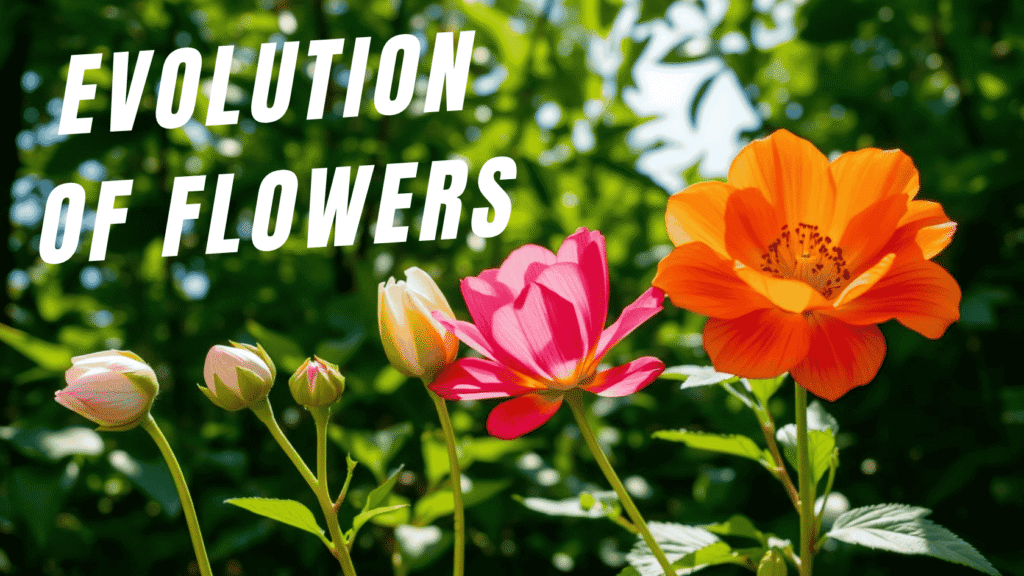

Hello! I’m Mhd Zain, and my love for the plant world has always drawn me to the beauty and mystery of flowers. What began as a casual interest in their shapes and colours turned into a strong curiosity about how they ‘ ve changed over time. I ‘ ve spent years learning about how each petal, scent and colour tells a story of survival and change. In this guide, I ‘ m here to take you all on that trip: we ‘ ll break down the science of the growth of flowers in a simple, fun way.Together, we ‘ ll try to find out how flowers grew into one of nature ‘ s most pretty and thriving inventions.
If you love gardens or wonder how a bloom appears each spring, this guide is for you. It explains the evolution of flowers in simple terms. You’ll see how algae turned into land plants and how this led to the variety of flowers we see today. Flowers are key to how plants reproduce. Their evolution changed ecosystems and helped grow crops. This guide will walk you through their journey: from algae to land plants, and then to the first flowers about 130 million years ago.
This part of the guide sets the stage for how flowers changed over time. You’ll learn about their adaptations to land, the development of seeds, and how they formed partnerships with animals. It covers the key points in their evolution.

Key Takeaways
- Flowers are the result of long-term floral evolution that transformed reproductive strategies.
- Plant adaptation to land began with algae and led to vascular plants and seeds.
- The flower evolution timeline highlights major shifts in the Devonian, Carboniferous, and Cretaceous.
- Angiosperms appeared in the Cretaceous and drove significant ecological and agricultural change.
- Subsequent sections will explain how seeds, pollinators, and genetics shaped modern flowers.
The origins of land plants and early steps toward flowering
The move from water to land was a big step for plants. Fossils and molecular clocks show that green algae were the first land plants. These algae lived in shallow pools and adapted to dry conditions, starting the long path to flowers.
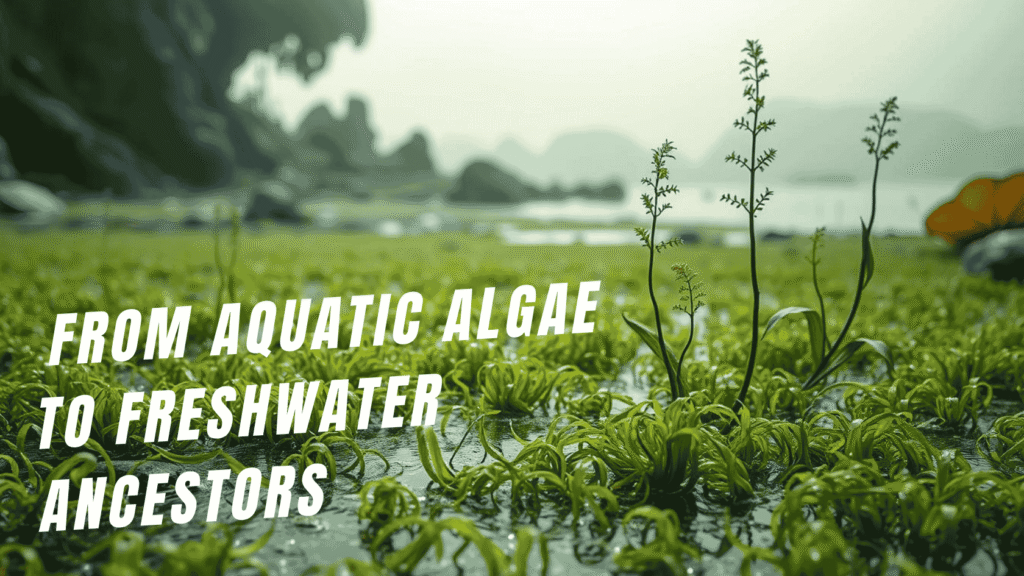
From aquatic algae to freshwater ancestors
Early green algae, like Charales and Klebsormidiophyceae, show traits of land plants. They lived in pools that dried up seasonally. This lifestyle helped them survive dry spells and move to land.
Key adaptations for terrestrial life
Plants developed tough spores and a waterproof cuticle to survive on land. They also got stomata for gas exchange and water balance. Intercellular air spaces helped move CO2, and vascular tissue allowed for taller growth.
These features led to larger, more complex bodies. Symbiosis with fungi helped early plants get nutrients. This partnership made it easier for plants to colonize land and led to new innovations.
Early land plant groups that set the stage
Bryophytes, like mosses and liverworts, showed how to survive on land. Vascular plants, including lycophytes and early ferns, added xylem and phloem around 400 million years ago.
These groups laid the groundwork for seed plants and angiosperms. The journey from water to land and the evolution of plants are closely linked.
| Feature | Why it mattered | Modern relevance |
|---|---|---|
| Sporopollenin-walled spores | Resisted desiccation, allowed wider dispersal | Seen in pollen and spores of many plants, key to reproduction |
| Waterproof cuticle | Reduced water loss on exposed surfaces | Essential for leaf survival in dry air, used by crops and wild plants |
| Stomata | Regulated gas exchange and transpiration | Critical for photosynthesis efficiency in modern plants |
| Vascular tissue | Enabled taller growth and transport of fluids | Foundation for trees, ferns, and most land plants |
| Mycorrhizal symbiosis | Improved nutrient uptake, specially phosphorus | Important for forestry, agriculture, and ecosystem health |
| Dominant sporophyte | Allowed more complex bodies and reproductive strategies | Set the stage for seeds and the eventual evolution of flowers |
The rise of seeds and the prelude to angiosperms

Seeds changed plant life forever, paving the way for flowers. They first showed up in the late Devonian with plants like Elkinsia. This innovation allowed embryos to travel with food and protection, breaking free from water dependence.
Gymnosperms, including conifers, cycads, and Ginkgo, emerged by the Carboniferous. They had naked seeds on cones, not in ovaries. This design helped them thrive in dry places and spread seeds far and wide.
Gymnosperms became the top plants in the Mesozoic era. They shaped the world, creating forests that dinosaurs called home. These forests also changed the soil and weather, setting the stage for the rise of angiosperms.
As gymnosperms grew, they laid the groundwork for the first flowers. The journey included changes in reproductive parts and the development of special features for pollination. These steps were important in the evolution of flowers.
Looking at these changes shows how plants keep adapting. The shift from open seeds to enclosed ones and fruits was a big leap. It shows how small changes can have a big impact on ecosystems.
evolution of flowers
The evolution of flowers began with a big change in how plants reproduced. Fossils show that true flowers appeared about 130 million years ago, in the early Cretaceous. This change led to a big shift in ecosystems and plant life.

When and where angiosperms first appeared
Fossils tell us that the first flowers were around in the early Cretaceous. They were found in many places, showing they spread quickly. Scientists are not sure exactly where they first appeared, but agree on the big increase in diversity during the Cretaceous.
Key innovation: enclosed seeds and fruit
The main feature of flowers is the way they protect seeds inside an ovary that turns into fruit. This protection helped seeds survive better. It also allowed for new ways to spread seeds, like animals carrying them.
This change in how seeds were spread led to more diversity in plants. Animals helped spread seeds, which made flowers more specialized. This is why we see so many different types of flowers today.
How floral structures evolved from ancestral organs
Flowers developed from changes in parts of plants that existed before them. Petals, sepals, stamens, and carpels came from these changes. Genes played a big role in how flowers evolved.
Genes like MADS-box transcription factors were key in defining what parts of a flower are. Early flowers were simple, but over time, they became more complex. This was to attract different pollinators.
| Feature | Ancestral State | Angiosperm Innovation |
|---|---|---|
| Ovule protection | Exposed ovules in gymnosperms | Enclosed ovary forming fruit |
| Pollination | Primarily wind and passive methods | Animal-mediated pollination with diverse syndromes |
| Organ identity | Undifferentiated reproductive structures | Distinct petals, stamens, carpels via genetic shifts |
| Dispersal strategies | Limited wind and gravity dispersal | Fruits attract animals for long-distance spread |
| Genetic drivers | Conserved developmental genes with ancestral roles | Co-option and diversification in genetic evolution of flowers |
Co-evolution with pollinators and pollination syndromes
Flowers and animals have been dancing together for millions of years. Early flowers needed beetles and other insects for help. Over time, they changed to form new partnerships, creating clear pollination syndromes.
Early pollinators and the shift from beetles to bees
Beetles were the first visitors to early flowers. Later, Mecoptera helped some plants before they disappeared. Around 100 million years ago, bees evolved from wasps and became key pollinators.
As bees grew, plants changed too. They adjusted their looks, smells, and nectar to attract bees. This change shows how flowers and pollinators co-evolved.
Pollination syndromes and specialized floral traits
Pollination syndromes are traits that match certain animals. Bees like bright colors and scents. Butterflies and moths prefer tubular flowers, while moths like pale, night-blooming ones.
Hummingbirds go for red, tubular flowers. Bats visit large, fragrant flowers at night. Flies and beetles tolerate strong smells.
Plants have special features like UV guides and controlled pollen. These traits show how flowers evolved to match their pollinators.
Ecological and agricultural importance of pollination
Pollination made plants more efficient and reduced pollen waste. It let them produce fewer, better pollen grains. This helped plants diversify and bees grow to about 20,000 species.
Pollination is key for food crops. It helps plants store carbon, stabilize soil, and filter water. But, pesticides and habitat loss threaten pollinators. You can help by creating habitats, reducing pesticides, and supporting research.
Major diversification events and the flower evolution timeline
The flower evolution timeline shows a big change from the mid-Cretaceous to the Paleogene. Angiosperms quickly spread into new places and shapes. This was a major event in flower history.
Cretaceous radiation and Paleogene expansion
In the Cretaceous, flowering plants grew fast. They took over spots once held by gymnosperms and changed the land.
The Paleogene brought warmer climates and new chances. Plants evolved to attract different pollinators and spread seeds. This kept the flower diversity going in the early Cenozoic.
Later innovations: monocots, dicots, and grasses
Monocots and dicots became key groups with unique features. They had different leaves and seeds, changing how plants grew and made seeds.
Grasses became important in the mid-Paleogene. They had new ways to make food and spread seeds. Over the last 10 million years, some grasses learned to use C4 photosynthesis for dry, warm places.
Genetic and developmental drivers of floral diversity
The evolution of flowers relied on genes like MADS-box. These genes control how organs form and grow.
Genome duplications and gene regulation changes led to new flower types. Changes in how plants grow and start organs created many shapes and ways to make seeds.
Genetic changes and how plants grow together explain the many flower types today. This mix of ecological and molecular innovation is why we see so many different flowers.
Conclusion
The story of flower evolution is one of plant adaptation. It starts with green algae in freshwater and ends with the rise of angiosperms. Innovations such as enclosed seeds and new floral parts led to rapid growth during the Cretaceous and Paleogene eras.
This journey shows how complex blooms emerged over time. It’s a story of how plants adapted to their environments.
Knowing how flowers evolved helps us appreciate garden plants and food crops. It explains why certain plants have specific shapes, scents, and colors. When you plant a tomato or admire an iris, you see evolutionary solutions at work.
Climate change and habitat loss will shape the future of plant adaptation. Protecting pollinators and habitats is key. This guide aims to make science easy to understand. It shows why preserving these systems is vital for ecosystems and agricul
Check out this one also :-
How a Flower Turns Into Fruit: Simple Science Explained for You

Pingback: How a Flower Turns Into Fruit: Simple Science Explained
Pingback: Organic Flower Farming in North America