
Ever wondered why your botanical shots don’t look as good as pro photos? The gap between amateur and pro photos is shrinking fast, thanks to AI.
In 2026, AI flower photography is now a part of our daily lives. You don’t need expensive cameras or years of training to take amazing photos. Smart tools can adjust your shots in real-time, making them look perfect.
AI solves big problems in flower photography. It handles tricky lighting, focuses on tiny details, and gets colors right. Your phone or camera can now help you take better photos.
This guide shows you how to take your photos from good to great. You’ll learn how tech makes advanced editing easy for everyone who loves nature photography.
Key Takeaways
- AI technology makes professional-quality botanical imaging accessible to photographers at all skill levels in 2026
- Smart tools automatically handle technical challenges like focus, lighting, and color accuracy
- You can achieve gallery-worthy results without expensive equipment or extensive training
- AI-powered smartphones and cameras analyze and enhance your shots in real-time
- Intelligent editing software saves significant time while delivering precise improvements
- Modern AI solutions democratize advanced techniques previously available only to professionals
Why AI Is Your Secret Weapon for Better Flower Photography
AI changes how you take flower photos by being a smart partner in your work. It looks at many professional photos to learn what makes them great. Then, it uses this knowledge to improve your photos right away.
Before AI, taking great flower photos took years of practice. You had to learn about exposure, composition, and color balance. AI now does this work for you, so you can focus on the moment.
AI tools can spot a flower in your photo instantly. They know the difference between petals and background. They also adjust for lighting and suggest changes before you take the photo.
AI makes flower photography easier and faster. You spend less time editing and more time taking photos. Your photos will look good in any weather or light.
AI can even fix photos that were not good before. It can make a dark photo bright and fix a photo that was not framed well. This used to be only for pros with expensive tools.
| Photography Aspect | Traditional Method | AI-Assisted Approach |
|---|---|---|
| Learning Time | 2-3 years of practice | Immediate guidance available |
| Editing Duration | 30-60 minutes per image | 5-10 minutes with automation |
| Equipment Requirements | Professional camera and lenses | Works on smartphones and tablets |
| Technical Knowledge | Extensive manual settings mastery | AI handles complex adjustments |
AI makes flower photography easier to access. It works on phones, tablets, and computers. You don’t need expensive gear to get great photos.
AI is your intelligent technical assistant. It takes care of the technical stuff like exposure and color. You can focus on creativity and finding new angles.
Your phone can be a powerful tool for flower photography with AI. The same tech used by pros is now in your pocket. This means anyone can take amazing flower photos.
AI makes flower photography flexible. You still control your photos. AI just helps remove the technical hurdles that used to hold you back.
Transform Your Flower Photography With AI-Powered Editing Tools
Editing your flower photos can now be faster and better with smart software help. AI tools analyze your images and make advanced changes that used to take a lot of time. They learn from many professional photos to know what makes flower pictures look great.
You can get results that look like they were done by a pro without spending years learning how. The tech does the hard work, so you can focus on being creative. Editing becomes fun and less about technical stuff.
Automated Color Correction for Natural Bloom Accuracy
Getting the right colors in flower photos can be hard because cameras often get it wrong. AI color correction looks at your photo and figures out the flower types. Then, it adjusts the colors to show the blooms as they really are.
No more worries about roses looking orange or blue flowers being purple. The AI knows each flower type has its own color. It makes sure each bloom looks natural and beautiful.
AI works well even when the light is tricky. It handles morning dew, backlit petals, and mixed light. Your flowers will always look their true colors, no matter when or where you took them.
Smart Noise Reduction in Macro Floral Images
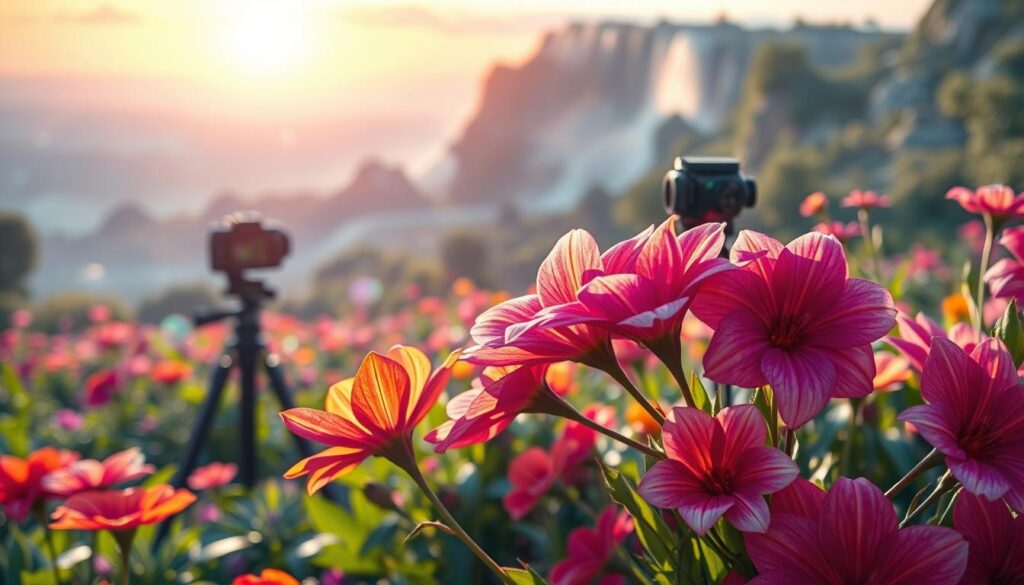
Old noise reduction tools can mess up close-up flower shots because they can’t tell what’s important. AI noise reduction looks at the image in detail and keeps the important parts sharp. It knows to leave petal textures and stamen details alone.
You can take macro shots in low light without losing quality. The AI makes high ISOs work better by removing grain but keeping things sharp. This lets you take more creative shots without worrying about the technical stuff.
The AI looks at the image in different ways to make smart choices. It reduces noise in big areas but keeps small details sharp. This way, your flowers look great and your shots are clear.
| Editing Aspect | Traditional Method | AI-Powered Approach | Time Saved |
|---|---|---|---|
| Color Balance | Manual slider adjustments with multiple test iterations | Automatic recognition and correction of flower-specific hues | 15-20 minutes per image |
| Noise Reduction | Uniform application risking detail loss in textured areas | Selective processing that preserves petal texture and fine structures | 10-15 minutes per image |
| Sharpening | Manual masking to protect soft backgrounds while enhancing subject | Intelligent edge detection automatically targets relevant details | 12-18 minutes per image |
| Exposure Correction | Global adjustments with manual local corrections using brushes | Automated highlight recovery and shadow lifting based on scene analysis | 8-12 minutes per image |
Instant Enhancement Adjustments That Save Hours
AI models learn from millions of photos to know what makes flower pictures good. They check your image fast and make changes that would take a lot of time to do by hand. This makes your photos look great with little effort from you.
You get the benefit of all this knowledge without needing to spend years learning. The AI knows what to do for different types of flower photos. Your images will look like they were done by a pro, but it’s easy.
These quick changes make editing much faster. You can work on many photos in the time it used to take to edit just one. You can even make the same changes to many photos at once.
Using Adobe Lightroom AI Denoise
Adobe Lightroom has a special AI Denoise tool for tough noise problems. You find it in the Detail panel, where you usually adjust noise. The Enhance option makes a new DNG file with much less noise.
This tool is great for macro shots taken at high ISOs. It keeps the fine details sharp while removing grain. Your photos will be clear and sharp, without the grainy look.
The tool takes a bit longer to work than old noise reduction, but it does a much better job. It looks at the image in detail to find and remove noise. The result is a clean image with all the important details.
Topaz Photo AI for Sharpening Details
Topaz Photo AI uses special AI models for sharpening, noise reduction, and upscaling. You can use them separately or together for the best results. It’s great for making close-up flower shots look amazing.
The sharpening tool is especially good for flower photos. It makes sure the important details, like petal veins and pollen grains, are sharp. But it keeps the background soft and natural.
You can adjust how much effect each tool has with easy sliders. The AI does the hard work, and you can fine-tune the results. This way, you get the best look for your photos.
Topaz Photo AI works well with other editing software. You can send your photos from Lightroom or Photoshop to Topaz for processing. Then, you can bring them back to your original editing app. This makes your workflow smooth and efficient.
Improve Garden Flower Composition Using AI Guidance Systems
Your garden flower composition can get a lot better with AI tools. These smart systems analyze and improve your framing choices. They help you create balanced, professional-looking photos of flowers.
AI checks your photos against photography rules like the rule of thirds. It gives you tips to make your photos stronger. You don’t need years of experience to take amazing photos anymore.
Real-Time Composition Overlays in Camera Apps
Modern camera apps show smart guides on your screen as you take photos. These guides help you place your flowers for the best effect. You can use them to improve your photos.
Apps like Adobe Lightroom Camera and ProCamera let you customize these guides. The AI picks the best guides for your scene. This feedback helps you take better photos right away.
The guides change as you move your camera. This helps you keep your photos balanced, no matter how you shoot. You’ll see big improvements in your photos after using these tools a few times.
AI-Suggested Framing for Balanced Botanical Photography
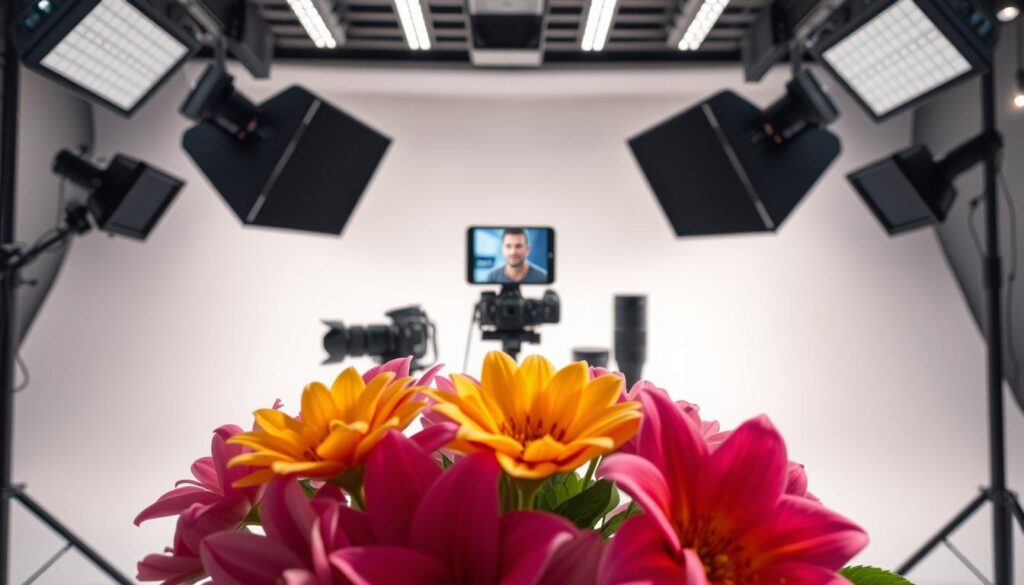
Advanced algorithms suggest framing adjustments for your photos. They tell you when to move closer or change your angle. You get simple tips on your screen.
Apps like Camera+ 2 and Halide Mark II focus on floral photos. They know botanical photography needs special framing. The AI considers things like petal arrangement and background when giving tips.
You might get tips like “Move 2 feet closer” or “Rotate 15 degrees clockwise.” These precise tips help you take better photos right away. This saves time and effort in editing.
Smart Crop Recommendations After Your Shoot
AI tools analyze your photos after you take them. They suggest crops to improve balance and focus on your subject. You can choose to accept, modify, or reject these suggestions.
The AI looks at many composition rules to find the best crop. It considers things like negative space and subject placement. Many photographers find new compositions through AI suggestions.
| AI Cropping Feature | How It Works | Best Used For | Platform Availability |
|---|---|---|---|
| Automatic Balance Detection | Analyzes visual weight and suggests reframing | Busy garden scenes with multiple flowers | iOS, Android, Desktop |
| Distraction Removal | Identifies and crops out unwanted elements | Close-up shots with cluttered backgrounds | iOS, Android, Web |
| Symmetry Optimization | Aligns subjects along composition guidelines | Centered flower portraits and macro shots | iOS, Desktop |
| Aspect Ratio Adaptation | Suggests crops for social media formats | Images destined for Instagram or Pinterest | iOS, Android, Web, Desktop |
Apple Photos Composition Analysis
iOS devices use machine learning to check your flower photos. The system flags photos with great composition potential. Apple Photos suggests crops that follow classic rules.
The auto-enhance feature also adjusts color and exposure. You can see suggested crops with a tap and apply them instantly. This makes it easy to improve many photos quickly.
Apple’s approach keeps your photos private. All analysis happens on your device. This gives you professional help while keeping control over your images.
Google Photos AI Framing Suggestions
Google Photos uses cloud-based AI to analyze your photos. It learns your style preferences and offers personalized cropping suggestions. These suggestions match your aesthetic and improve composition quality.
The suggested edits feature appears when you open any botanical photo. You see multiple cropping options ranked by how well they match composition and your style. Google’s algorithms get better as you accept or reject suggestions.
You can enable automatic creation of improved versions. Google Photos generates alternative crops of your best flower images. This lets you compare original and AI-optimized versions side by side.
Both platforms help you train your eye by studying their recommendations. You’ll start noticing strong compositional elements naturally. This speeds up your learning and helps you take better photos in the future.
Master Floral Detail Photography Through AI Focus Stacking
Photographing flowers up close is tricky. Only tiny parts seem sharp. AI focus stacking now solves this problem automatically.
Macro lenses make flowers look huge but only a small part is in focus. The rest blurs away.
This problem has bothered photographers for years. They want every petal sharp but can’t. AI focus stacking solves this problem, making everything sharp.
Automated Focus Stacking for Maximum Sharpness
Focus stacking software uses smart algorithms. It looks at many photos taken at different focus points. The AI picks the sharpest parts and blends them into one image.
This process is fast. Modern AI does it in seconds, not hours like before. You just take a few photos with the focus shifting slightly.
The AI does all the hard work. It fixes camera movement and exposure changes. Even small breezes won’t ruin your photos.
Tools like Helicon Focus and Adobe Photoshop now have AI. They offer different ways to make your photos sharp. You can see how they look and adjust until you’re happy.
AI-Enhanced Depth of Field Control
New AI tools let you change depth of field after taking photos. This means you can make parts of your flower sharp and others blurry. It’s like having a special lens.
This changes how you work because you can adjust photos later. The AI understands your scene in 3D. You can then change how sharp or blurry things are.
Tools like Luminar Neo make editing easier for flowers. They know how to make parts sharp without looking fake. This is because the AI respects the natural look of flowers.
Selective Focus Tools for Spring Bloom Captures
AI tools help make your spring bloom photos look professional. They automatically focus on your main flower and blur the background. It’s like using an expensive lens, even with a smartphone.
These tools work by creating a depth map. They know what’s in the front and what’s in the back. You can control how blurry the background is with simple settings.
These tools are great for photos in busy gardens. They remove distractions and keep your flower sharp. Even if you can’t control the background, AI tools can.
The best results come from photos with some depth. Even a little depth helps AI tools work their magic. You can find these tools in apps like Portrait AI and Focos.
| Flower Type | Recommended Frames | Focus Step Size | Best Aperture Setting | Wind Compensation |
|---|---|---|---|---|
| Small blooms (under 2 inches) | 8-12 frames | 1-2mm increments | f/5.6 to f/8 | Required for outdoor shots |
| Medium flowers (2-4 inches) | 12-20 frames | 2-3mm increments | f/8 to f/11 | Helpful in breezy conditions |
| Large blooms (over 4 inches) | 15-25 frames | 3-5mm increments | f/11 to f/16 | Essential for detailed petals |
| Macro extreme close-ups | 20-40 frames | 0.5-1mm increments | f/8 to f/11 | Critical for success |
Knowing these details helps plan your focus stacking. Start with fewer frames and add more as you get better. The AI does the hard work while you focus on your shot.
Identify and Catalog Wildflower Shots With AI Recognition
Keeping track of hundreds of flower species in your photos is easy with AI tools. These systems analyze your images and match them with vast botanical databases. You get instant access to scientific names and detailed info on each species.
This technology turns your photos into meaningful documentation. You learn about plants and create a searchable archive of your finds. Your collection grows more useful with every photo you add.
Plant Identification Apps for Accurate Documentation
Modern apps use AI to recognize flowers with great accuracy. They analyze petal shape, color, and growth habits to identify species. Just photograph a flower, and the AI gives you results in seconds.
The best apps show how sure they are about each match. You get habitat info, blooming seasons, and where the plant is found. This helps you verify the identification based on your photo’s context.
Many apps also connect you with botanical experts. They help verify uncertain identifications. This collaboration ensures your documentation is accurate. You learn to recognize unique features of each species.
Automated Seasonal Flower Documentation Systems
Smart systems organize your photos by blooming period and location. They create a living archive that tracks flower appearances year after year. Your documentation shows how climate affects bloom timing.
The AI finds patterns in your collection, saving you hours. You discover which species bloom together and how to plan your shoots. This knowledge helps you capture the best moments.
Advanced systems create visual timelines of your photos. You see gaps in your documentation and plan future shoots. These systems turn random photos into a structured botanical inventory.
Smart Metadata Tagging for Your Photo Library
AI tagging systems add keywords to your flower photos automatically. They recognize colors, types, and contexts without manual input. Searching for “yellow spring wildflowers” or “purple garden flowers” brings up relevant images instantly.
The metadata includes species names and descriptive terms. Your search capabilities expand beyond simple organization. You find specific images for projects in seconds.
These systems also track camera settings and lighting conditions. You analyze what works for different flower types. This data helps you improve your photography skills.
| Feature | Traditional Method | AI Recognition | Time Saved |
|---|---|---|---|
| Species Identification | Field guide research (15-30 min per flower) | Instant results (5-10 seconds) | 95% reduction |
| Photo Organization | Manual folder sorting (2-3 hours per 100 photos) | Automatic categorization (2-3 minutes) | 98% reduction |
| Metadata Tagging | Individual keyword entry (30-60 seconds per photo) | Batch AI tagging (1-2 seconds per photo) | 95% reduction |
| Seasonal Tracking | Spreadsheet maintenance (1-2 hours monthly) | Automated timeline generation (instant) | 99% reduction |
PlantNet Image Recognition
PlantNet is developed by research scientists and botanical institutions. It excels at identifying native plants and wildflowers. You get an identification engine trained on wild species.
The app lets you specify the plant part you photographed. This targeted approach improves accuracy. You also contribute to botanical research by sharing your observations.
PlantNet has regional databases for specific areas. This provides more accurate results for local flora. You can switch regions when traveling to photograph different ecosystems. The platform supports offline identification in remote areas.
iNaturalist Computer Vision
iNaturalist combines AI identification with community engagement. The platform’s computer vision system suggests species, which experts then verify. You get confirmation from experienced botanists and naturalists.
Your flower photography helps scientists track plant distribution and phenology changes. The platform maps where specific species occur and documents blooming patterns. Your hobby contributes to valuable scientific data collection efforts.
The social learning aspect of iNaturalist sets it apart. You connect with photographers and naturalists who share your interests. Expert users provide identification tips and suggest photography locations.
Both platforms offer mobile apps that work seamlessly with your camera workflow. You photograph flowers and get immediate identification feedback. This real-time information helps you document species accurately while still on location.
Perfect Natural Light Flower Portraits Using AI Light Analysis
Creating stunning flower portraits is all about mastering natural light. The challenge is that light changes throughout the day. AI light analysis tools now help you capture perfect natural light flower portraits anytime.
Traditional light meters struggle with flowers’ unique challenges. AI tools analyze these challenges and give you the right settings for proper exposure.
AI-Powered Light Meter Apps for Optimal Exposure
Modern light meter apps use AI to go beyond simple exposure readings. They analyze your scene and adjust settings for botanical photography. This means better exposure for your flower photos.
Photographing white or pale flowers is easier with AI light meters. They avoid underexposing these delicate petals. This way, you get the right balance of light and detail.
Apps like Lumu Power and Lightmeter Pro use machine learning for flower photography. They understand how light affects different petals and textures. Point your phone at a scene, and they instantly give you the best exposure settings.
These apps also recognize backlit flowers automatically. They suggest settings for capturing the glowing quality of backlit petals. This helps you get the best light for your photos.
Intelligent Shadow and Highlight Recovery
High-contrast lighting is a big challenge in flower portraits. AI algorithms now rescue details in both shadows and highlights. This makes your photos look amazing.
These intelligent recovery tools analyze your photo’s tonal distribution. They adjust brightness zones selectively. This keeps your photos looking natural and three-dimensional.
Adobe Lightroom’s AI-powered Texture and Clarity sliders show this technology in action. They help recover details in bright and dark areas. This preserves the quality of your subject.
The technology works well with dappled light, common in garden photography. It smooths out transitions between light and dark. This maintains the natural quality of the lighting.
| Recovery Feature | Traditional Method | AI-Enhanced Method | Quality Improvement |
|---|---|---|---|
| Highlight Recovery | Global exposure reduction | Selective petal detail restoration | Preserves whites without graying |
| Shadow Lifting | Brightness increase with noise | Intelligent detail enhancement | Clean shadows with maintained contrast |
| Contrast Balance | Manual curve adjustments | Automatic tone mapping | Natural look without halos |
| Color Preservation | Separate hue corrections | Integrated color intelligence | Accurate bloom colors throughout |
Golden Hour Prediction and Planning Tools
Timing your flower photography for the best light quality is key. Golden hour provides soft, warm light that makes petals glow. AI tools now tell you when this happens at your location.
These apps use astronomical data and location info to predict sun position. They give you exact times for the best light. This helps you plan your shoots for the most beautiful natural light flower portraits.
The technology considers seasonal sun angles and light quality changes. Summer golden hour is different from winter. These tools account for these variations in their recommendations.
Weather integration adds another layer of intelligence to your planning. Cloud cover, atmospheric haze, and humidity affect light quality. AI-powered planning tools factor in weather forecasts. They tell you if conditions will deliver the soft, diffused lighting you need.
Photopills AI Sun Tracking
Photopills is the top planning tool for natural light flower portraits. It uses augmented reality to show the sun’s path through your phone’s camera view. You can scout locations and see where light will fall on your flower subjects.
The AI sun tracking feature calculates sun elevation and azimuth angles throughout the year. Point your phone at a garden bed, and the app shows you when direct sunlight will illuminate those flowers. This lets you plan entire seasons of photography sessions.
The planner tool lets you select specific dates and times to see lighting conditions months in advance. This is invaluable for seasonal flowers that bloom for limited periods. You can coordinate bloom times with optimal lighting angles to ensure you capture perfect shots during brief flowering windows.
- Augmented reality visualization shows sun position in real-time through your camera view
- Sun path tracking reveals lighting angles for any date and time at your chosen location
- Elevation charts display golden hour duration and sun height throughout the year
- Shadow calculations predict where shade will fall during your planned shoot
- Night mode planning helps you prepare for blue hour flower photography sessions
Weather-Based Shooting Recommendations
Cloud cover changes light quality more than any other factor in outdoor flower photography. Overcast skies create soft, diffused lighting. Bright sun produces dramatic directional light. AI weather analysis tools predict these conditions days in advance, helping you schedule sessions for the lighting style you want.
Apps like UAV Forecast and PhotoWeather combine weather data with AI analysis to provide photographer-specific recommendations. They don’t just report cloud percentage—they interpret what those conditions mean for your natural light flower portraits. You get actionable guidance like “excellent soft light for macro work” or “dramatic side-lighting conditions expected.”
Wind speed predictions help you plan for flower movement issues. Strong breezes make sharp focus difficult in macro photography. Weather-based AI tools alert you to calm periods when you can shoot at slower shutter speeds for maximum depth of field.
Atmospheric haze forecasts are valuable for photographers working with distant subjects or landscape-style flower compositions. Clean air produces sharp, high-contrast images. Light haze creates a softer look with muted colors. AI analysis tells you which conditions to expect so you can match your shooting plans to the atmospheric qualities that will enhance your creative vision.
These intelligent planning tools transform your approach to natural light flower portraits. They remove the guesswork from timing decisions. You spend less time hoping for good light and more time shooting under conditions you’ve deliberately chosen to match your creative goals.
Create Professional Results With AI Background Removal
AI tools can now remove backgrounds from your flower photos quickly. This means you can turn messy garden shots into clean, professional images. These images are perfect for publishing or displaying.
The technology understands plants in great detail. It knows about petals, stems, leaves, and even pollen or water droplets. This way, it keeps the important details of your photos while removing the rest.
One-Click Subject Isolation for Clean Botanical Photography
Modern AI tools make it easy to isolate subjects in your flower shots. Just upload an image and click a button. In seconds, you get a flower with a transparent background.
Even complex flowers with thin stems benefit from this technology. It can handle wispy petals or overlapping elements. AI analyzes texture, color, and depth all at once.
Your flower photography looks professional when distractions are gone. Fences, other plants, and garden tools disappear. This lets your flower stand out.
These clean cutouts are great for many uses. You can make educational materials, design presentations, or fine art prints. The transparent backgrounds make it easy to use them in different projects.
Smart Background Replacement Options
After isolating your flower, AI lets you replace the background. You can place your flowers against settings that make them look even better. Solid color backgrounds make vibrant blooms pop dramatically, while softly blurred natural backdrops create dreamy effects.
The replacement process is more than just pasting. Advanced AI systems match your flower’s lighting, colors, and shadows. This creates seamless integration that looks naturally photographed together.
You can use backgrounds that are hard to capture in real gardens. Gradient backdrops, textured surfaces, or nature scenes can all be used. This lets you match images to specific aesthetic requirements or brand guidelines.
Seasonal projects benefit from smart replacement features. Winter flower photography can get spring garden backdrops. Summer blooms can be placed against autumn foliage. Your creative vision determines the final result.
Generate Studio-Quality Images From Garden Shots
Professional photography studios offer perfect lighting and clean backgrounds. AI background removal brings these advantages to your garden photography. You can transform garden shots into studio-quality images without expensive equipment.
The process removes environmental clutter that distracts from your subject. Messy backgrounds, uneven lighting, or weather-damaged foliage disappear. Your flower appears against a pristine backdrop that mimics professional studio conditions.
This capability is especially valuable for commercial botanical photography. Product images, catalog shots, or marketing materials require clean, distraction-free presentations. AI tools deliver these results from field photographs taken in actual gardens or natural habitats.
Remove.bg for Instant Processing
Remove.bg offers fast background removal services online. You upload your flower photograph and get a clean cutout with a transparent background in about five seconds.
The platform handles botanical subjects well. It recognizes plant structures and preserves fine details like flower stamens, delicate petals, and thin stems. You receive high-resolution results suitable for professional use without manual refinement.
Batch processing features help when you need to edit multiple flower photographs. Upload entire photo sessions at once and receive processed versions quickly. This saves hours compared to manual background removal techniques.
Photoshop Neural Filters
Adobe Photoshop’s Neural Filters bring AI capabilities into your familiar editing environment. These tools include sophisticated selection algorithms that understand flower anatomy and structure. The AI distinguishes between your botanical subject and background elements with impressive accuracy.
The smart subject isolation feature works seamlessly with complex flower arrangements. It preserves crucial details like pollen grains, water droplets, and the subtle texture variations that bring botanical photography to life. You maintain maximum image quality throughout the process.
Harmonization features automatically adjust colors, lighting, and shadows when you replace backgrounds. Your flower subject blends naturally with its new setting, creating photorealistic results. The AI analyzes both elements and makes intelligent adjustments that would require advanced manual editing skills.
These Neural Filters continue improving through machine learning. Adobe regularly updates the algorithms based on millions of processed images. Your flower photography benefits from constantly evolving technology that gets smarter with each release.
Conclusion
AI technology has changed the game for photographers in 2026. Now, you have access to tools that handle the technical stuff. This lets you focus on your creativity.
AI tools are like smart helpers for your photos. They make editing faster and open up new possibilities. They help with everything from setting up your shot to fine-tuning your photos.
Try out the techniques from this guide with AI tools. See which ones fit your style best. Your choices will depend on what you like and what you’re photographing.
Good flower photography still needs a solid foundation. You must understand light, know your subjects, and have your own style. AI just makes it easier to achieve your vision. As AI gets better, so will your photos.
FAQ
What AI tools should I start with if I’m new to flower photography?
Start with your smartphone camera app’s AI features. They include automatic scene recognition and composition guides. Then, try Adobe Lightroom for color correction and noise reduction. Google Photos and Apple Photos offer automated editing suggestions.These tools are easy to use and improve your flower photos without needing to know a lot about technology.
Can AI really identify wildflowers accurately from my photographs?
Yes, apps like PlantNet and iNaturalist can identify wildflowers with great accuracy. They compare your photos to millions of botanical specimens. These systems analyze flower characteristics like petal shape and color. While accuracy depends on image quality, these tools usually get it right for common wildflowers. They might suggest multiple possibilities when they’re not sure.
Will using AI make my flower photography look artificial or over-processed?
Not if you use AI tools wisely. Modern AI algorithms enhance natural light flower portraits without making them look fake. You control how much AI adjustment you apply. Tools like Topaz Photo AI and Adobe Lightroom AI focus on technical improvements. They make your photos look professionally captured, not artificially manipulated.
Do I need expensive equipment to benefit from AI flower photography tools?
No, you don’t need expensive camera gear. Most AI editing apps work with images from any source, including smartphones. Apps like Remove.bg and Google Photos can transform your garden flower photos, regardless of your camera.AI tools are especially valuable for smartphone photographers. They help compensate for hardware limitations, delivering results that rival those from dedicated cameras.
How does AI focus stacking work for macro floral images?
AI focus stacking analyzes multiple photos of the same flower. It identifies the sharpest areas in each frame and blends them into one image. This creates a photo with extended depth of field.The AI handles alignment and masks transitions seamlessly. It can even compensate for slight subject movement. This process transforms a tedious task into a simple workflow that delivers sharpness throughout your macro floral images in minutes.
Can AI help determine the best time to photograph flowers outdoors?
Absolutely. Apps like Photopills use AI to predict optimal lighting conditions for your location and date. They show you when golden hour occurs and the sun’s angle at any time.AI weather analysis can also recommend shooting days based on cloud cover predictions. This helps you schedule sessions for the best light, whether it’s soft, diffused light or dramatic directional lighting.
What’s the difference between AI color correction and manual color adjustment?
AI color correction analyzes your image to understand lighting conditions and adjusts colors based on flower species. This process happens quickly and considers multiple color channels. Manual adjustment requires knowledge of color theory and takes more time.Many photographers find the best approach is to use AI as a starting point and then make minor manual adjustments to match their vision.
Will AI background removal work with flowers that have complex edges and thin stems?
Yes, modern AI background removal tools like Remove.bg and Photoshop Neural Filters excel at handling complex botanical subjects. They understand flower anatomy and can distinguish subject from background at the pixel level.While wispy elements like pollen strands may require minor manual refinement, the AI handles most of the isolation work automatically, even with challenging wildflower shots.
How can AI improve my flower photography if I already understand composition basics?
AI tools offer valuable benefits by providing objective analysis of your composition. They suggest alternatives and help you work more efficiently. AI composition overlays reinforce good habits during capture.Smart crop recommendations reveal stronger framings within your original images. Real-time feedback helps you experiment with variations quickly. Think of AI as a knowledgeable assistant that offers a second opinion and handles technical details while you focus on creative decisions.
Can AI help organize my growing collection of seasonal flower documentation?
Yes, AI-powered photo management systems automatically analyze and tag your flower photographs. They identify flower species, colors, seasons, and locations, organizing your documentation into categories without manual sorting.Apps like Google Photos and Apple Photos use on-device and cloud-based AI to create albums automatically. They recognize patterns in your shooting and make your entire library searchable using natural language queries.
Is AI noise reduction better than traditional noise reduction for flower photography?
AI noise reduction outperforms traditional algorithms for floral detail photography. It distinguishes between actual image noise and fine botanical details. Traditional noise reduction smooths all high-frequency details, often destroying the qualities that make flower photography compelling.AI tools like Adobe Lightroom AI Denoise and Topaz Photo AI analyze patterns to remove only digital artifacts. They preserve and even enhance authentic textures, allowing you to shoot in challenging lighting conditions without sacrificing delicate details.
Do professional flower photographers use AI tools?
Yes, professional botanical photographers increasingly incorporate AI tools into their workflows. They use AI for tasks like automated culling and organization of large photo shoots, as well as sophisticated editing techniques like focus stacking and selective adjustments.Professionals recognize AI tools as force multipliers that free them to concentrate on artistic vision, subject selection, and creative aspects of flower photography that machines cannot replicate.
How does AI-enhanced depth of field control work after I’ve already taken the photograph?
AI-enhanced depth of field tools analyze your image to create a depth map. They identify how far each element is from the camera. Using this spatial understanding, the AI can selectively apply blur to background areas while keeping your flower subject sharp.More advanced implementations allow you to adjust the focus point after capture. This gives you creative flexibility impossible with traditional photography, especially valuable when working with smartphone cameras or situations where you couldn’t achieve your desired depth of field during capture.
What AI features should I look for in a camera app for shooting flowers?
Look for camera apps offering real-time scene recognition that specifically identifies flowers and applies optimized settings automatically. Composition overlays showing rule-of-thirds and golden ratio guides are also important. Subject tracking that maintains focus on your flower even with slight movement is crucial.Advanced apps may include AI-powered macro modes that handle focus stacking automatically, HDR processing that preserves petal detail in both highlights and shadows, and intelligent exposure recommendations based on analyzing similar botanical photography. Apps from Google, Apple, and third-party developers like Halide increasingly incorporate these AI capabilities.
Can I use AI to create consistent results across different shooting conditions?
Yes, AI’s greatest strength in flower photography is creating consistent results across different shooting conditions. AI editing tools can analyze images shot in various lighting conditions and apply appropriate adjustments. This ensures consistent color accuracy, tonal balance, and overall aesthetic across your collection of garden flower composition.This consistency is particularly valuable when documenting the same garden over time or creating a cohesive portfolio of botanical photography. The AI learns your style preferences and can automatically apply similar treatments, ensuring your wildflower shots maintain a unified look, regardless of when or where you captured them.
Also Read This:-
- Which Part of the Flower Becomes the Fruit? And How Does AI Detect Fruit Formation?
- 12 Key Benefits of AI in Agriculture and Smart Farming Practices
- How a Smart Gardening System Can Turn You Into a Pro Gardener
- The Future of AI for Teachers in USA Classrooms in 2026
- What Is an AI Soil Sensor and How Does It Help Your Garden?
- How AI in Photography Is Changing the Way We Capture and Edit Photos
- AI in Your Pocket: How Your Phone Uses Computational Photography