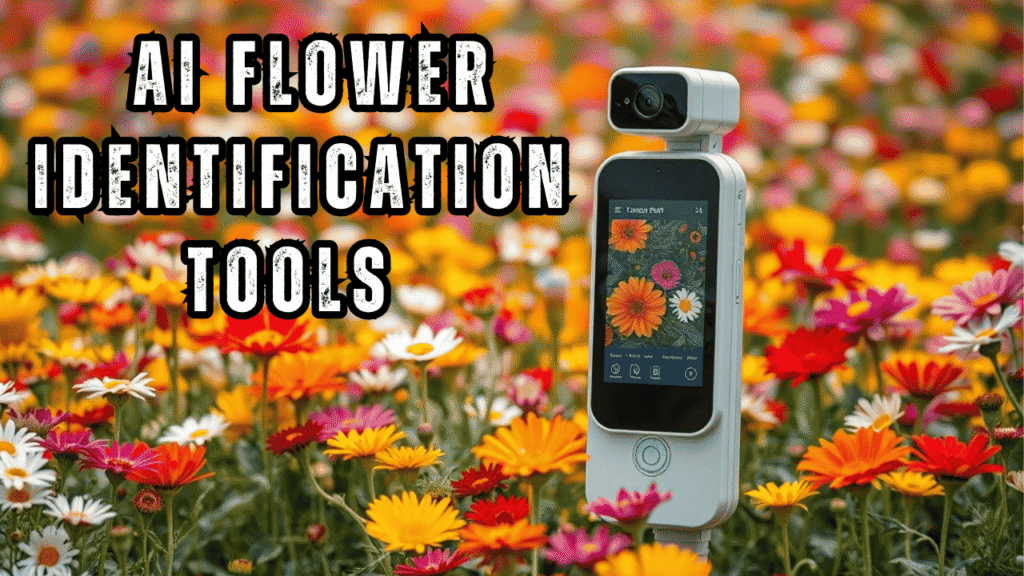

Do you want to identify flowers quickly? Whether you’re gardening at home, hiking, or foraging, this article has you covered. It introduces reliable AI Flower Identification tools for smarter gardening, safe foraging, and curiosity satisfaction. These tools are great for anyone. Hobby gardeners, botanists, citizen scientists, teachers, and foragers will find them helpful. AI for flowers provides faster and more accurate results than memory or paper guides.
Hi, I am Mhd Zain, a passionate flower explorer and garden enthusiast with years of experience in identifying and studying plants. In this guide, you will Learn how flower recognition software works. Learn about free and paid digital flower identifier options. Discover how to select the ideal tool for your needs, utilize it effectively in the field, and explore advanced features for serious gardening or research purposes.
Key Takeaways
- AI Flower Identification accelerates plant identification and reduces the risk of misidentification.
- Artificial intelligence for flowers benefits gardeners, hikers, educators, and researchers.
- Free and paid digital flower identifier apps vary in accuracy and features.
- Look for flower recognition software with offline mode, broad species coverage, and privacy controls.
- Practical field tips improve results: clear photos, multiple angles, and habitat notes.
What AI Flower Identification Does and Why It Helps You
AI flower identification quickly identifies a likely species name from a photo. It uses pattern recognition and contextual data. This way, you can quickly find out what a flower is without searching through long field guides.
You receive instant suggestions and additional information, such as habitat and bloom time. There are also ways to check your results with experts.
How Artificial Intelligence Works for Identifying Flowers
The technology uses convolutional neural networks and deep learning. These models are trained on large datasets like iNaturalist and herbarium collections. They learn from thousands to millions of images per species.
Training is always ongoing. Models get better with user-submitted photos and expert checks. Adding metadata like GPS coordinates and date helps improve accuracy. You can also upload multiple images for a stronger match.
Benefits of using automated flower identification in the field
Speed is a big advantage. Automated flower identification gives quick suggestions on your phone. This saves time, whether you’re on a hike or gardening.
It’s also more accessible. A digital flower identifier helps beginners and non-experts. It’s useful for spotting invasive species or identifying plants safely.
Data value is important for science and conservation. Sharing records helps track trends and inform research. This data is used in local extension work.
When to use a digital flower identifier vs. traditional guides
Use digital tools for quick IDs and wide species coverage. Many apps work offline, which is handy in remote areas.
For rare species or legal matters, traditional guides and experts are best. They offer certainty and detailed information.
A mix of digital and traditional methods is ideal. Start with AI for a guess, then use keys and experts for sure IDs. Remember, AI is not always 100% accurate, so always verify.
| Use Case | Best Tool | Why It Helps |
|---|---|---|
| Quick roadside ID | Digital flower identifier app on phone | Fast suggestions from images and GPS for immediate curiosity checks |
| Citizen science records | Platforms with automated flower identification and iNaturalist integration | Automates species suggestions and contributes occurrence data for research |
| Foraging or edible checks | AI for initial screening plus expert verification | Speeds identification but encourages verification to avoid risk |
| Rare species or conservation work | Traditional keys, herbarium consultation, and expert review | Provides authoritative confirmation beyond model suggestions |
Best AI Flower Identification Apps and Tools to Try Today
There are many options for quick plant IDs or a detailed botany workflow. Start with free apps to learn how they work. Then, move to paid services for better accuracy and more features.

Free flower identification app options are great for beginners. iNaturalist combines AI with community checks for global data. Google Lens quickly identifies plants from photos. Seek by iNaturalist is easy for families and has offline packs. PlantNet uses community data to confirm local plants.
Free tools offer quick suggestions and basic names. You can upload photos and get descriptions. But, they might have smaller species lists, fewer export options, and ads.
Flower recognition software at a higher tier offers more for experts. PictureThis and Plantix have subscriptions with detailed models and care advice. Paid apps give more features like offline lists and expert checks.
Think about premium tools for reliable offline IDs and detailed analysis. Subscriptions are good for serious gardeners and researchers needing accuracy and data access.
ai botany tool comparisons show different strengths. iOS and Android apps are great for quick field use. Web tools are better for batch uploads and exporting data.
Choose tools based on your device and needs. iOS apps follow strict privacy rules. Android apps offer more file access. Web tools are best for syncing and exporting data across devices.
Start with a free app for exploration, then add paid tools for accuracy. Use community platforms like iNaturalist for validation.
| Tool | Cost | Strengths | Limitations | Best for |
|---|---|---|---|---|
| iNaturalist | Free | Community verification, AI suggestions, citizen science export | Variable regional coverage, relies on community input | Researchers, record-keeping contributors |
| Google Lens | Free | Fast recognition, broadly available, simple UI | Limited botanical detail, web-dependent features | Casual users, quick IDs |
| Seek by iNaturalist | Free | Family-friendly, offline packs, gamified learning | Fewer export options, simplified data | Kids, beginners, offline explorers |
| PlantNet | Free | Strong community herbarium, regional focus | Coverage gaps for some regions, UI less polished | Botany students, regional enthusiasts |
| PictureThis | Paid subscription | High accuracy models, care tips, disease ID | Subscription cost, some features behind paywall | Serious gardeners, horticulture pros |
| Plantix | Paid subscription | Disease diagnostics, agricultural focus, expert input | Geared toward crops, less ornamental coverage | Farmers, crop advisors |
How to Choose the Right Flower Recognition Software for Your Needs
Finding the right tool to identify plants can be tough. Start by thinking about what’s most important to you. Consider species coverage, speed, whether it can be used offline, and how it handles your photos. Use this list to compare and try out free trials before you buy.

Right Flower Recognition Software
Accuracy and species coverage considerations
First, check if the app shares its training dataset size and area. Apps trained on North American plants work best for U.S. wildflowers. Look for apps that list the number of species they cover or offer packs for specific areas like eastern U.S. wildflowers.
Be aware of limits that can lower accuracy. Things like lookalike species, seasonal changes, hybrids, and poor photo quality can make results less reliable. Apps that show confidence scores help you understand the results. For more trust, look for third-party checks from universities or botanists.
Speed, offline mode, and usability factors
Think about if you need quick results or are okay with waiting for cloud analysis. On-device models are faster for quick answers on hikes. Cloud models might be slower but can be more accurate.
Offline mode is key for areas without internet. Look for apps with downloadable packs and models. A good app should be easy to use, letting you upload photos, tag GPS, and view habitat or bloom-season info easily. A clear interface is important for both beginners and experts.
Privacy, data usage, and photo storage policies
Read the terms carefully to understand data ownership and sharing. Some apps keep rights to use your photos for training, while others keep them private or let you opt out. If you want control, make sure the privacy settings let you keep your observations private by default.
Check the app’s cloud storage rules and limits. Some apps limit how long they keep your images or require a subscription for unlimited syncing. Make sure the app follows U.S. privacy rules and offers clear opt-outs for third-party sharing to protect your data.
Decision checklist
First, focus on accuracy and species coverage. Then, test offline use and how easy it is to use. Lastly, check if the app’s privacy policies meet your standards. Try free versions to see how fast and accurate they are before committing to a paid subscription.
Practical Guide to Using AI Flower Identification in the Field
When you take AI into the field, small habits make a big difference. Use practical ai flower identification tips to capture useful images, verify results, and apply findings safely to gardening, research, or foraging. Short steps help you get reliable IDs without slowing your walk.
Tips for taking clear photos to improve recognition results
Capture multiple angles: get close-ups of petals, leaves, and reproductive parts plus a wider shot that shows habitat. Tap to focus on your smartphone and keep the camera steady. Include a coin or your hand for scale when size matters.
Use good light: shoot in diffuse natural light to avoid deep shadows or blown highlights. Avoid heavy backlight when possible. Higher resolution images boost model accuracy, so keep your phone’s quality settings high.
Keep views unobstructed and ethical: gently move debris away if allowed, but never remove protected specimens. Turn on GPS and date stamps in the app to improve digital flower identifier usage and add context for later verification.
Interpreting results: confidence scores and verification steps
Read confidence indicators as guidance, not absolute truth. A high percentage or top-ranked suggestion is helpful, yet lower confidence means you should treat the ID as tentative.
Use multiple images per observation when the app allows multi-photo uploads. Automated flower identification best practices include cross-verifying with regional field guides, university extension resources, or community platforms like iNaturalist.
Document uncertainties. Keep extra photos and notes if you plan to submit records to experts or citizen science projects. This improves the chance of accurate verification and the long-term value of your observation.
Using AI results to support gardening, research, or foraging safely
For gardening, use IDs to plan placement and pollinator gardens. Combine AI suggestions with Extension Service advice for disease or pest diagnosis. Practical AI flower identification tips help you match care routines to the plant’s needs.
In research or citizen science, contribute well-documented observations to platforms such as iNaturalist or GBIF. Clear photos and location data enhance the scientific value of research and can validate the best practices for automated flower identification.
Never rely solely on an app for foraging. Use the free flower identification app features only as a starting point. Cross-check with authoritative foraging guides and consult local experts before consuming any wild plant to avoid toxic lookalikes.
| Action | Why it matters | Quick tip |
|---|---|---|
| Take multiple shots | Shows different diagnostic features to the model | Include petals, leaves, stem, and habitat |
| Enable GPS and date | Provides location and phenology context for experts | Turn on location in app settings before you start |
| Use scale object | Helps distinguish similar species by size | Place a coin or your fingertip near the flower |
| Cross-verify IDs | Reduces risk of misidentification | Check field guides, extension services, or iNaturalist |
| Respect regulations | Protects rare or protected plants and habitats | Do not collect in protected areas; follow local laws |
| Keep detailed notes | Aids expert review and future study | Log conditions, behavior, and any uncertainties |
Advanced Features to Look For in an AI Botany Tool
When picking an AI botany tool, look beyond basic identification. Seek features that enhance accuracy and practicality. A good tool should link to trusted plant databases, support community checks, analyze many images, and let you easily share findings for research or outreach.

Integration with plant databases and expert community validation
Choose tools that connect to sites like iNaturalist, the USDA PLANTS Database, or Flora of North America. These links offer detailed plant info, maps, and updates. This keeps your IDs up-to-date. Plus, when experts or vetted community members check your records, they gain trust for conservation and research.
Multi-image analysis, habitat info, and seasonal filtering
Tools that recognize flowers from multiple images increase ID confidence. They should also offer habitat and elevation filters. These filters use ecological context to narrow species lists. Seasonal filters and data on plant life cycles help avoid wrong IDs and support studies on when plants bloom.
Exporting data and using results for citizen science projects
Look for tools that let you export data in formats like CSV or GeoJSON. Direct syncing to repositories makes your work easier. Tools that allow you to submit data to iNaturalist or GBIF with clear rights make volunteer and school projects more valuable. Adding photos, dates, and GPS to your data makes it useful for research.
Seek tools with advanced features for flower identification and automated integration. This way, your data helps validate findings and supports research. Such tools make every observation you collect more valuable over time.
Conclusion
AI Flower Identification tools offer quick, easy, and accurate ways to identify flowers. They save time and help you learn about plants without heavy field guides. These tools are great for both casual gardeners and professionals, speeding up identification and revealing new species.
To pick the right AI flower tool, start with free apps like iNaturalist or Pl@ntNet. Practice taking photos of flowers, leaves, and stems. If you need more accuracy or offline use, try paid options with trial periods.
Always double-check AI identifications with field guides or experts. Share verified photos to help improve AI models and support biodiversity research. For important tasks like foraging or conservation, use multiple sources and follow local laws to stay safe.
Frequently Asked Questions
What is AI flower identification and how does it work?
AI flower identification uses machine learning to recognize blooms from photos. It’s trained on large datasets of plant photos. This way, it learns to identify flowers by their visual patterns.It gets better over time with more photos and expert checks. Adding GPS, date, and EXIF data helps make it more accurate.
Who benefits most from using a digital flower identifier?
Many people benefit from digital flower identifiers. This includes hobby gardeners, botanists, and hikers. It also helps educators and foragers in the United States.It makes plant identification faster and more accurate. It’s great for beginners and helps detect dangerous plants.
Should you rely solely on AI for high-stakes identifications like foraging or conservation?
No, you shouldn’t rely only on AI for important identifications. Use AI for quick IDs, but always double-check. This is true for foraging and conservation.AI accuracy can vary. Always cross-check important IDs with experts or botanical guides.
What free flower identification apps are recommended and what can you expect from them?
Free apps like iNaturalist and Google Lens are good for quick IDs. Seek by iNaturalist and PlantNet are also free and useful. They offer instant suggestions and basic species names.They also let you submit observations to community databases. Free apps might have limited features and smaller coverage.
What advantages do paid flower recognition apps offer?
Paid apps like PictureThis and Plantix offer more accurate models. They have curated species lists and full offline databases. They also provide expert verification and gardening tips.These apps are great for professionals and serious gardeners. They need reliable offline IDs and exportable results.
How should you choose between iOS, Android, and web-based ai botany tools?
Choose based on your needs. iOS and Android apps are good for quick IDs in the field. Web tools are better for batch uploads and desktop review.Consider platform quirks and whether the service syncs across devices. Also, look for offline packs for remote use.
What photo-taking tips improve AI flower recognition accuracy?
Take photos from different angles. Include close-ups of petals, leaves, and stem. Use good lighting and keep the image steady.Include a scale reference and GPS data. Submit several photos per observation. Avoid obstructed views and don’t remove protected specimens.
What do confidence scores mean and how should you interpret them?
Confidence scores show how sure the model is about a match. Higher scores mean more reliability. But, scores aren’t always right.For low scores, gather more photos or check with experts. Post observations to community platforms for vetting.
How can AI identification tools support citizen science and research?
AI tools let you submit observations to databases like iNaturalist. They support research and conservation. Look for export options and proper licensing.Validated records help study plant changes and monitor invasive species. They also study when plants bloom.
What privacy and data-use issues should you check before using a flower recognition app?
Check the app’s terms on photo ownership and model training. Some apps use your photos for training, while others keep them private. Look for opt-out options.See if observations are public by default. Check how long photos are stored and if the app shares data. Confirm privacy compliance and look for opt-out controls.
What advanced features are most useful in an AI botany tool?
Useful features include integration with plant databases and expert validation. Multi-image analysis and habitat filtering are also helpful. Robust export options are important for research and conservation.These features increase ID confidence and support scientific use. They help with long-term monitoring and education.
Can AI help determine if a plant is poisonous or edible for foraging?
AI can help narrow down options for foraging. But, never rely solely on it. Always check with foraging guides and local experts.Misidentification can be dangerous. Treat AI as a first-pass tool only.
How do offline modes and regional packs affect performance in remote areas?
Offline modes and regional packs help in remote areas. They let you get IDs without internet. On-device models are faster and more private.But, cloud services might be more accurate. If you work in remote areas, choose apps with good offline packs.
How can you improve AI model performance over time as a user?
Contribute high-quality observations to community platforms. Include multiple images and GPS data. Validate or correct IDs when you can.Many services update models with user submissions and expert verifications. Your contributions help improve accuracy for everyone.

Pingback: Organic Flower Farming in North America