

Did you know that over 80% of the ocean is unexplored? Hidden in this vast area are underwater flowers that change how we see blooms. These plants come in various shapes and bright colors, unlike anything you might imagine.
These aquatic blooms are key to ocean health and diversity. Experts are studying them to understand their role in marine ecosystems. A recent study offers a peek into how these plants survive in the ocean’s harsh conditions.
Key Takeaways
- These hidden blooms reshape our idea of marine life.
- Underwater flowers in the ocean adapt to unique conditions.
- They contribute to a healthier and more balanced ecosystem.
- Ongoing research uncovers unexpected floral diversity underwater.
- You gain new perspectives on oceanic habitats and their fragile equilibrium.
Examining the Case Study: Why Oceanic Floral Life Matters
Marine blossoms are key to life underwater. They keep the balance in marine habitats. This supports many fish and crustaceans. Research shows how these plants connect different species.
The Role of Marine Flora in the Ecosystem
Seagrasses, algae, and kelp forests are nurseries. They feed and protect smaller creatures. This helps keep biodiversity strong and shows how each plant is important for the health of the sea.
Environmental Factors Affecting Underwater Blooms
Light, nutrients, and temperature control blooms. Scientists watch these factors to forecast changes in marine life. This study helps us understand how water quality and changes affect the sea.
Spotlight on Underwater Flowers in the Ocean
Exploring the ocean’s depths, you might see colorful clusters of aquatic flowers. These are called marine flowerbeds. They grow in dark places, getting nutrients from their surroundings. Their bright colors create lively homes for many creatures, helping keep the ocean stable.
Scientists from places like NOAA study these plants in coastal areas. They find that some plants grow well in cold waters near the poles. Others thrive in warm waters near coral reefs. Each place shapes these plants differently.
Let’s look at a few examples:
| Bloom Name | Depth Range | Key Feature |
|---|---|---|
| Seagrass Meadows | Up to 190 feet | Dense root systems anchor sandy ocean floors |
| Sea Pen Colonies | Shallow to mid-depth | Soft, feathery stalks attract small fish |
Sea Bloom Phenomenon: A Closer Analysis
Ever wondered about the vibrant greenery under the sea? The sea bloom phenomenon happens when nutrient-rich waters meet in the right spot. This creates lush green waves on the ocean floor, showing us the hidden wonders beneath.
Scientists study these blooms to learn how different factors work together. By paying attention to these conditions, you can learn more about ocean life. This helps you predict when new blooms will appear, exciting marine observers everywhere.
How Sea Currents Stimulate Growth
Ocean currents carry minerals that feed marine plants. A steady flow of these nutrients helps plants grow faster and form denser clusters. As each current moves across the seafloor, it brings new life to different areas.
Influence of Water Temperature and Salinity
Changes in temperature and salinity can cause a sudden growth of plankton and algae. When warm and cool layers mix, you might see hidden blooms. Different salt levels also affect how plants grow, leading to interesting patterns.
| Key Factor | Impact on Blooms |
|---|---|
| Currents | Supply nutrients and boost development |
| Temperature | Triggers metabolic activity |
| Salinity | Regulates growth rates |
Marine Flowerbeds in Coastal Habitats
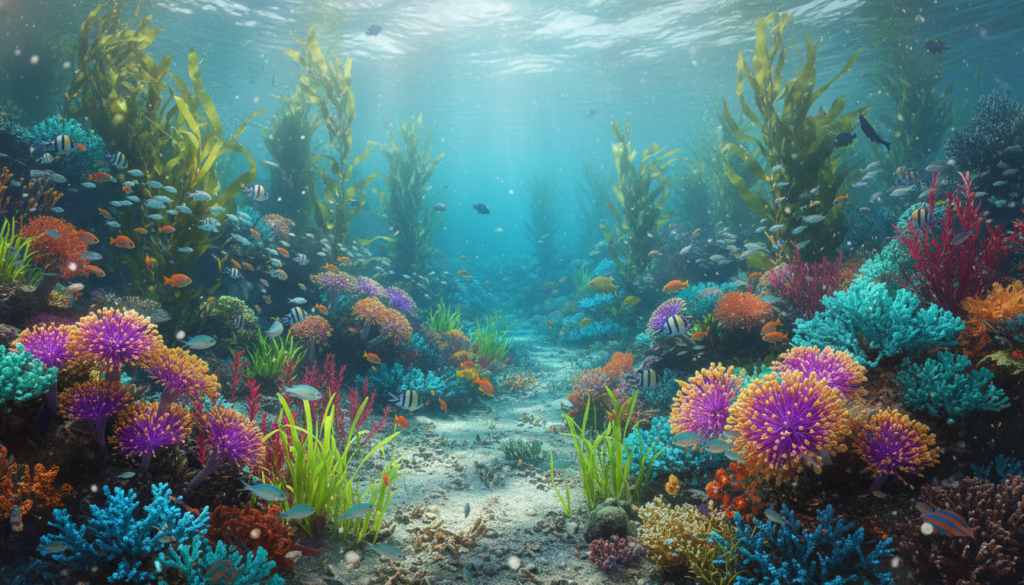
These lush undersea formations bring color and life to shorelines. They thrive where currents carry rich nutrients. This supports many organisms, creating thriving ecosystems.
Key Locations for Thriving Flowerbeds
Rocky reefs, seagrass meadows, and coral-rich zones are home to vibrant blossoms. You might see green algae and soft corals. Together, they create a colorful underwater world.
- Rocky reefs with hidden tide pools
- Seagrass meadows in shallow bays
- Coral-dominated zones found near tropical shores
Importance to Local Fisheries
Protecting these flowerbeds helps fish populations. This is a great way for you to support local seafood markets and protect coastal communities. It ensures stable harvests and economic security.
| Habitat | Key Marine Plants | Fisheries Benefits |
|---|---|---|
| Rocky Reef | Kelp, Sponges | Nursery for Juvenile Fish |
| Seagrass Meadow | Eelgrass, Turtle Grass | Food Source and Shelter |
| Coral Zone | Soft Corals, Zooxanthellae | Habitat for Reef Fish |
Floral Biodiversity Underwater and Conservation Efforts
Many groups are working together to protect marine habitats. Governments, environmental groups, and private donors support replanting efforts. These efforts give underwater flowers a second chance.
Researchers collect data to understand how these plants grow and face threats. Laws help protect these efforts, and global agreements promote teamwork.
Studies show progress in fixing damaged habitats. The right methods and laws help underwater flower exploration thrive. This teamwork brings hope for better coastlines and lets rare flowers flourish.
Here’s how you can help:
- Donate to projects that restore vital flora
- Support local campaigns for biodiversity
- Share knowledge on marine conservation
Your support strengthens these efforts. It helps keep our oceans colorful and full of life.
Aquatic Flower Exploration: Methodologies and Innovations
Modern research tools show us aquatic plants in a new light. They capture the vibrant details in deep waters. This changes how we understand and study marine habitats.
Underwater Photography Techniques
Camera housings with better seals let you dive deeper. The right light brings out the colors of hidden petals. Remote triggers help capture scenes without disturbing them.
- High-pressure casings for extended dives
- LED lighting arrays for vivid colors
- Sensor-based autofocus for clarity
Scientific Diving Protocols
Dive teams follow strict safety rules. This protects both humans and marine life. They use waterproof tablets to record important details.
These steps let you explore safely. They also help protect the delicate environments filled with ocean floor blossoms.
How Ocean Floor Blossoms Benefit Coral Reefs
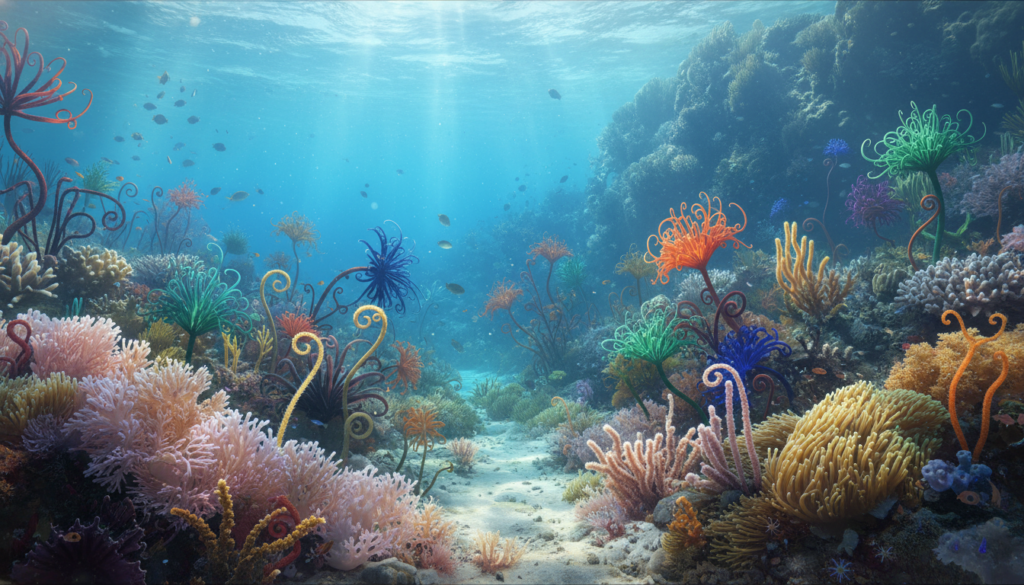
Ocean floor blossoms make oxygen for coral reefs. They also act as a living shield against strong currents. When marine flowers grow near corals, it helps keep the ecosystem balanced.
This balance protects delicate reefs from too much wave force. It also helps different marine organisms grow together.
Healthy corals often team up with new marine plants. This attracts fish and crustaceans, making the habitat richer. This partnership shows how underwater plants and coral can support each other.
When aquatic blooms and reef creatures grow together, everyone benefits:
- More oxygen helps corals grow strong and supports reef life.
- Natural wave dampening protects coral from damage.
- Shared nutrients boost marine communities and improve local fishing.
Documenting Deep-Sea Floral Species: A Research Insight
Ever wondered how scientists study plants in the deep sea? They use special technology and work together to find these delicate flowers. Their findings lead to more questions about life in the dark depths.
Tools for Deep-Sea Observation
Explorers use submersibles and remote vehicles to explore the deep. Sonar helps them find and study the plants. This technology lets us see how plants can survive in extreme conditions.
Case Study Findings in the Gulf of Mexico
Recent trips to the Gulf of Mexico found tough plants. These plants have special ways to breathe and get nutrients. This discovery helps us understand how life evolved in the sea.
Data Interpretation and Future Implications
Scientists look at many images and samples to learn more. Their work helps us understand what makes these plants thrive. This knowledge can help protect these plants and guide new research in botany.
Challenges in Sustaining Underwater Botanical Diversity
Protecting marine plants is tough. Rising ocean temperatures harm plant cells and stop growth. Changes in salinity and melting ice caps make these plants less resilient. Your help is needed, but time is running out.
Climate Change Impact
Coral bleaching events are shrinking habitats for marine plants. Warmer waters speed up bloom cycles, but many plants can’t keep up. Acidification from more carbon dioxide weakens tissues, making it hard for plants to stay healthy.
Pollution and Industrial Threats
Chemicals from factories and farms harm photosynthesis. These toxins travel through coastal waters, making seeds less viable. This also leads to fewer fish, upsetting the food web.
Legal Frameworks for Protection
National Marine Sanctuaries protect sensitive areas from overfishing and industrial growth. Community cleanups and global agreements help too. Your efforts, through education or action, are key to saving marine plants.
Collaborations and Future Studies on Marine Flora
International research opens new doors for understanding sea plants. By comparing local data with global findings, we see how sea plants adapt. Teams from places like NOAA and Scripps Institution of Oceanography share knowledge, improving our work and protecting sea life.
Working with global teams brings new ideas and funding. We learn from each other, making our work better. This teamwork sharpens our skills and helps advance Marine Flora research. Here are some key players in this field:
| Institution | Region | Core Focus |
|---|---|---|
| NOAA | United States | Marine Research & Policy |
| Scripps Institution of Oceanography | United States | Ocean Exploration & Innovation |
| United Nations Environment Programme | Global | Sustainable Marine Development |
| World Wildlife Fund | Worldwide | Conservation & Education |
Conclusion
You see the amazing power of underwater flowers in the ocean. They are symbols of hope for marine plants. These plants keep the ocean’s life in balance.
Their bright shapes and colors protect homes for many creatures. They also feed important organisms. This shows us how each part of the ecosystem works together.
By supporting marine flora, you help the environment. Research and policy changes can make a big difference. Even small actions can help protect these wonders.
Strong plant life can stop erosion and protect fish. This knowledge helps us make better choices. It encourages us to reduce pollution and support good laws.
Every step we take helps these hidden wonders thrive. It ensures a future where underwater flowers bloom brightly.
FAQ
What exactly are underwater flowers in the ocean, and how do they differ from land-based blooms?
Underwater flowers in the ocean are a special group of marine plants. They live in the water and have adapted to survive without air. They manage their buoyancy and get nutrients in ways that land plants don’t.
Why is oceanic floral life important for aquatic ecosystems?
Oceanic floral life is key for many sea creatures. These plants help by offering shelter, oxygen, and areas for breeding.. Plants like seagrasses and algae are vital for food chains and keeping habitats stable.
What is the sea bloom phenomenon, and how can you spot it?
A sea bloom happens when marine plants grow very fast. Look for bright patches of algae or plants in certain areas. Currents, temperature, and nutrients can cause these blooms.
How does the floral biodiversity underwater benefit coral reefs?
Underwater plants help coral reefs by making oxygen and attracting good sea creatures. Many plants and corals work together, helping each other grow and stay healthy.
Which methods are used in aquatic flower exploration?
Scientists use underwater cameras, diving, and special tools to study marine plants. These methods let them observe plants closely without harming them. This helps us learn about their biology and physical traits.
Where can you find thriving marine flowerbeds, and why do they matter?
Marine flowerbeds thrive in coastal areas and around coral reefs. These places are good for fish and other sea animals. They help local fisheries and ecosystems stay healthy.
How do ocean floor blossoms adapt to deep-sea conditions?
Ocean floor blossoms live in dark, cold places. They have special features or work with bacteria to get nutrients. This lets them survive in extreme conditions.
What are the main threats to underwater botanical diversity?
Pollution, climate change, and destroying habitats are big threats. You can help by supporting conservation, reducing plastic, and pushing for sustainable ocean policies.
How can you learn more about deep-sea floral species and ongoing research?
Marine institutes and groups publish studies on deep-sea plants. You can read scientific journals, follow research groups, or join citizen science projects. This way, you can learn about new discoveries and how to protect them.
Read This one Also :-
- Learn About AI Farming Technology for Modern Farming Needs
- A Beginner’s Guide to North American Plants and Their Unique Features
- Easy Ways AI Helps You Improve Your Flower Photography in 2026
- Which Part of the Flower Becomes the Fruit? And How Does AI Detect Fruit Formation?
- 12 Key Benefits of AI in Agriculture and Smart Farming Practices